Dreamers: An AI App To Make Your Dreams Come True
I started Dreamers to help humanity take advantage of AI, not let it control us like how social media ended up doing. Empowering people to make their dreams happen.
Initial Vision
Inspired by apps like CalAI, UMax, and Quittr projects built by 18-20‑year‑olds that went viral on TikTok and pulled in six figures a month, I thought: why not me? No VCs, no funding games. If I built fast, shipped fast, and marketed smart, Dreamers could grow the same way.
In reality, I didn't ship anything fast. It was all rough sketches and ugly wireframes, just trying to figure out what Dreamers should even be.
After Woosh, I was personally searching for direction and I saw the same in people around me: my sister (about to graduate fashion school with no clear next step), my girlfriend (7 years at Applebee's but unsure what was next).
So Dreamers started not as a viral product but as an exploration of: what could AI do to help people who feel lost figure out their next move?
The fast‑ship mindset and the reality of endless sketches conflicted. Dreamers stayed in design files, more a personal thought experiment than a product anyone could touch.
Ambition without clarity creates drift. Telling yourself "just move fast" doesn't help if you don't know which problem you're solving, speed without direction is just running in circles.
The Journal
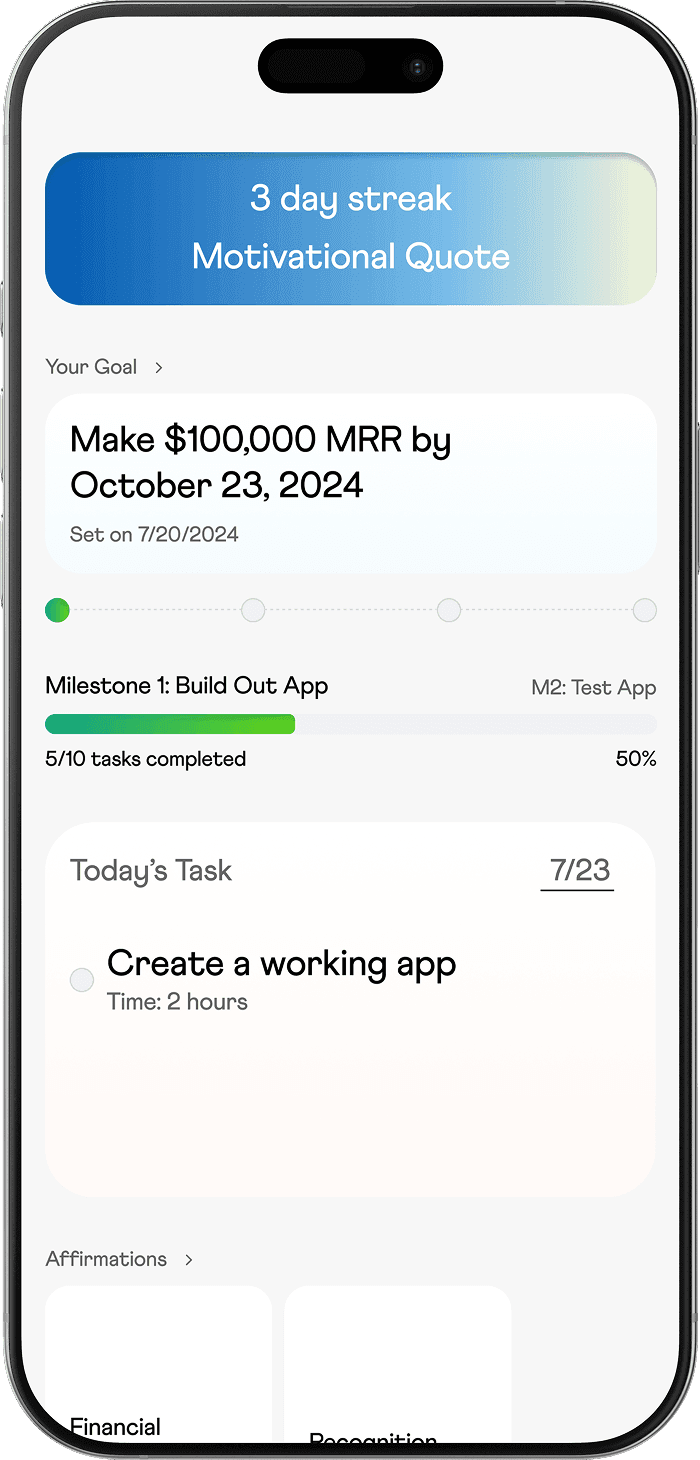
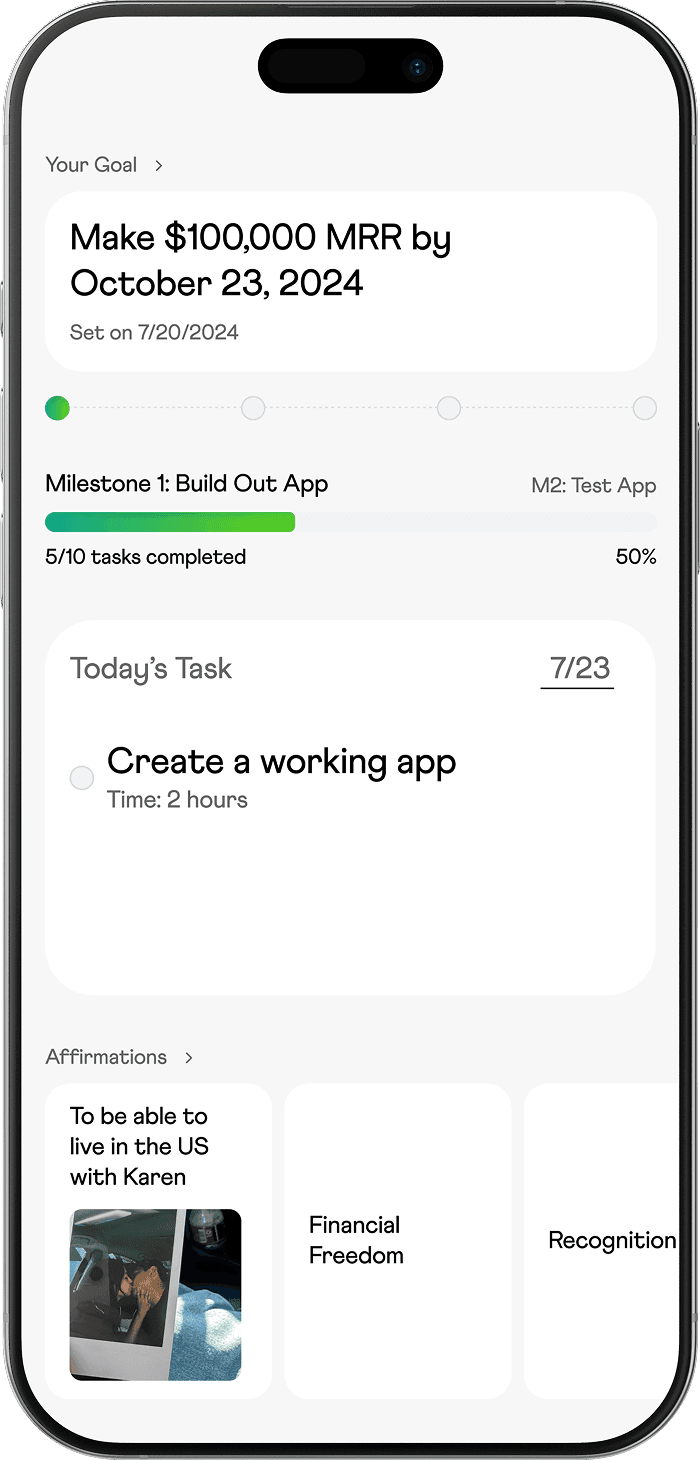
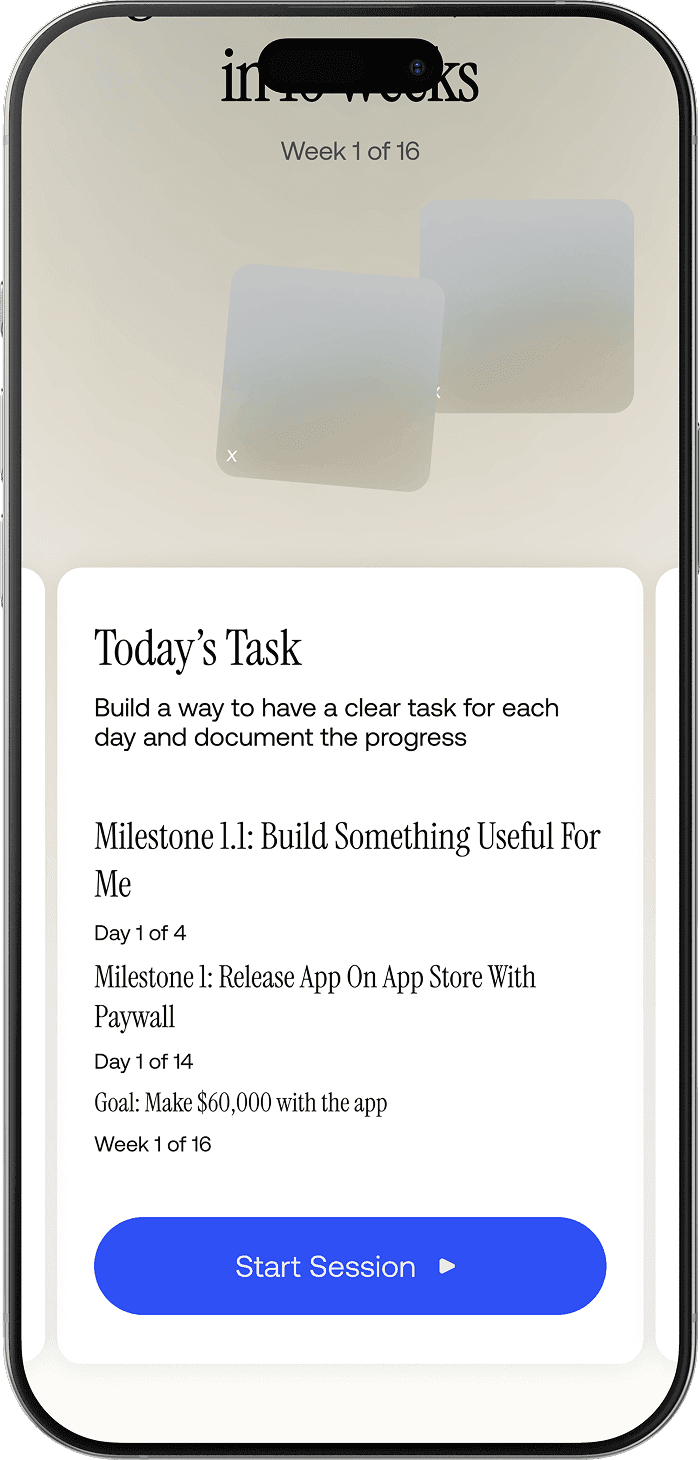
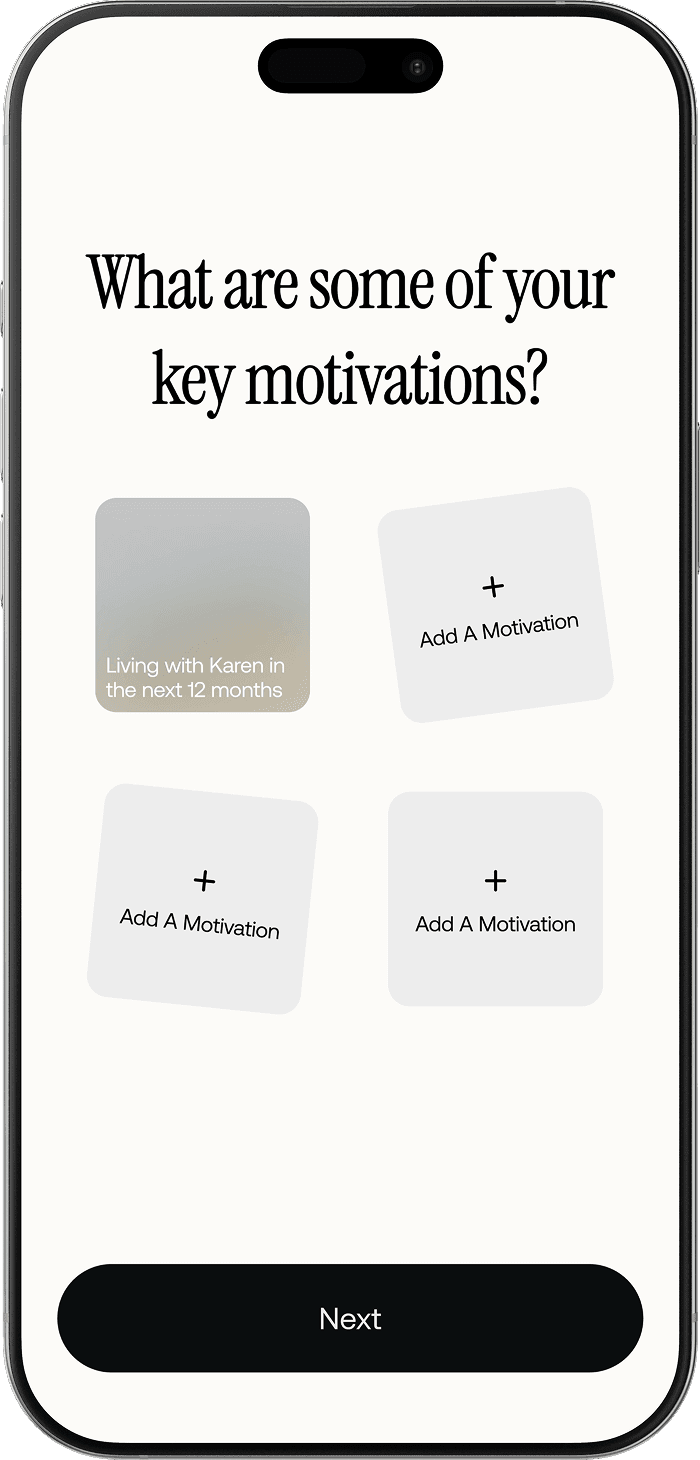
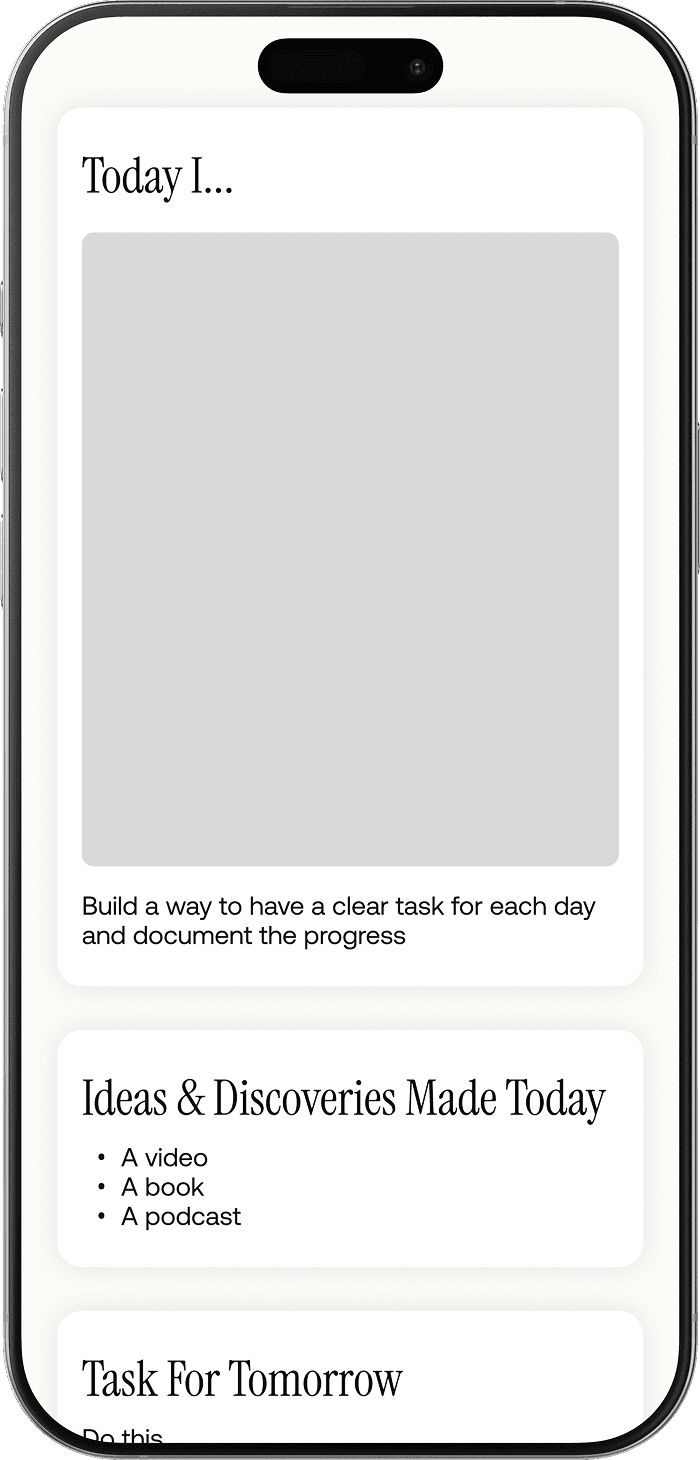
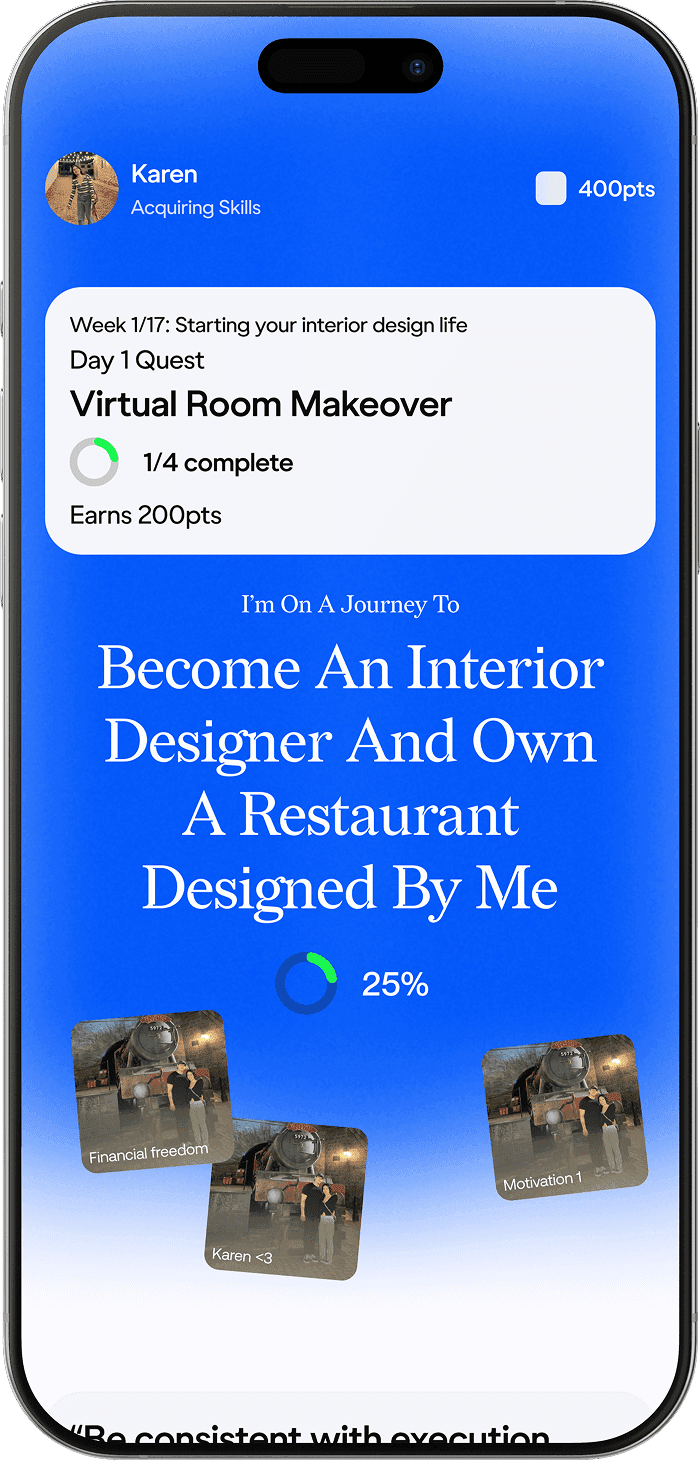
I designed and built the front end of a journal‑like app: goal at the top, week tracker, daily task, progress bar, and motivational widgets.
But this was my first time building an AI product, and integrating AI into React Native was harder than I expected. I got stuck on things like:
• getting text to stream properly into the UI • handling tool calls gracefully • managing basic error handling without crashing flows
I burned about a month wrestling with this. Later, I discovered that Vercel’s AI SDK actually works with React Native lol 🤦 , which would’ve solved most of those issues right away.
The “app” worked visually on my phone, but the AI was broken under the hood. Nothing shipped. What felt like “almost done” was really just a polished shell that never made it past my local device.
The hard part of building an AI app isn’t streaming text, it’s proving you’re solving a problem worth streaming text for in the first place. Instead of stalling for a month on implementation details, I should’ve hacked a shortcut and tested whether anyone even cared about the journal concept.
Milestones & Branding Drift
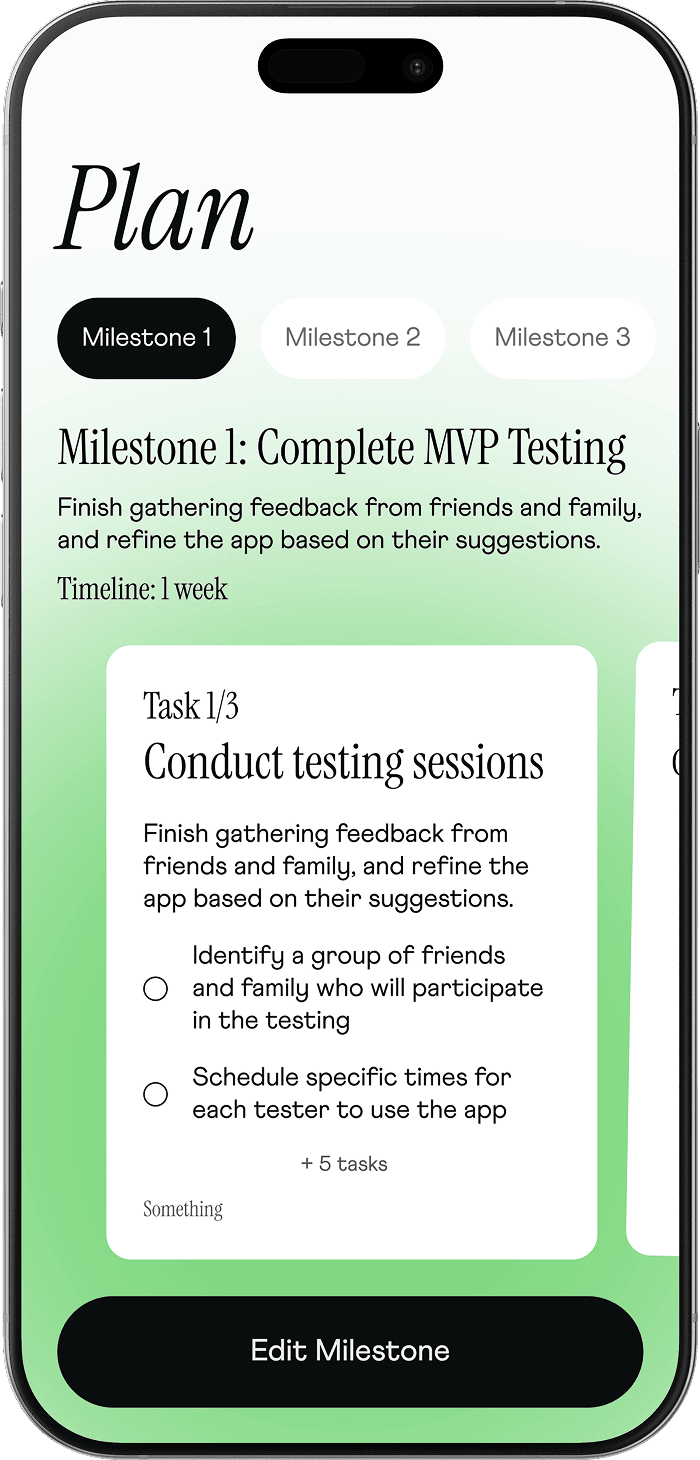
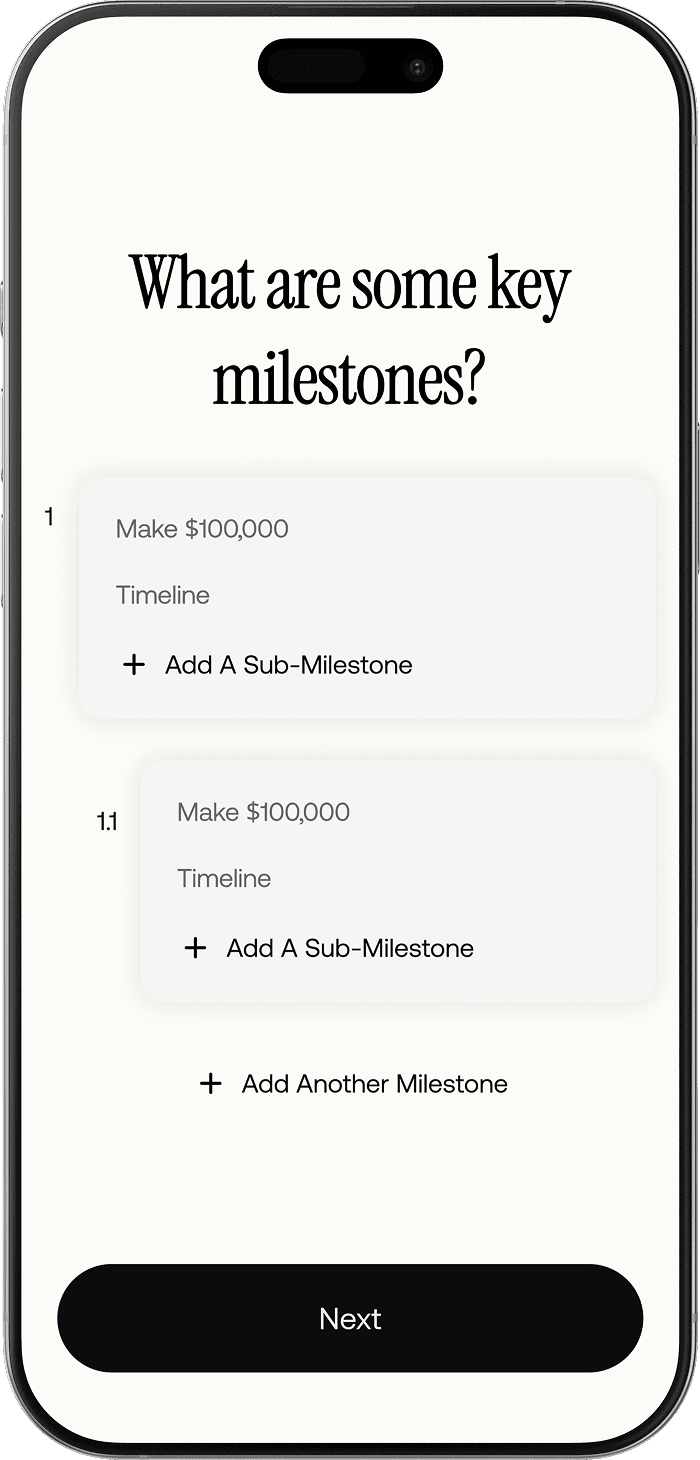
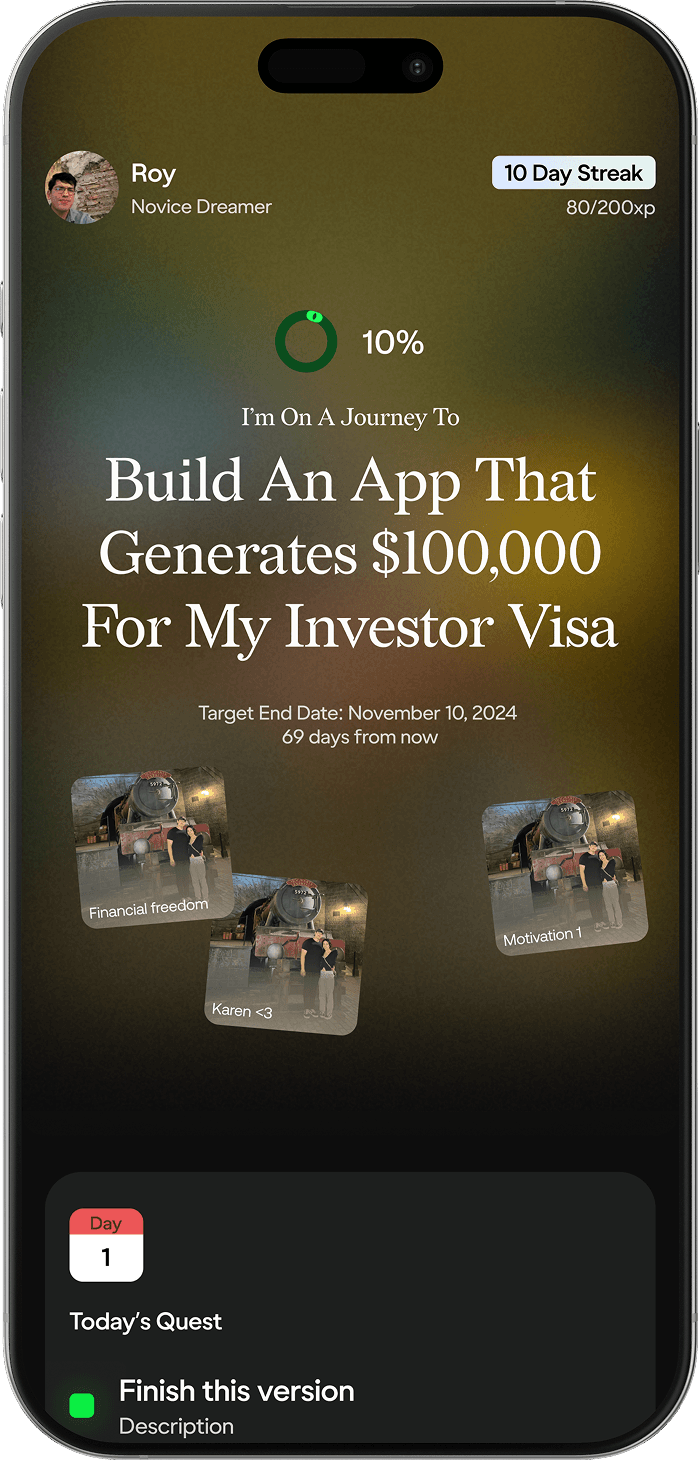
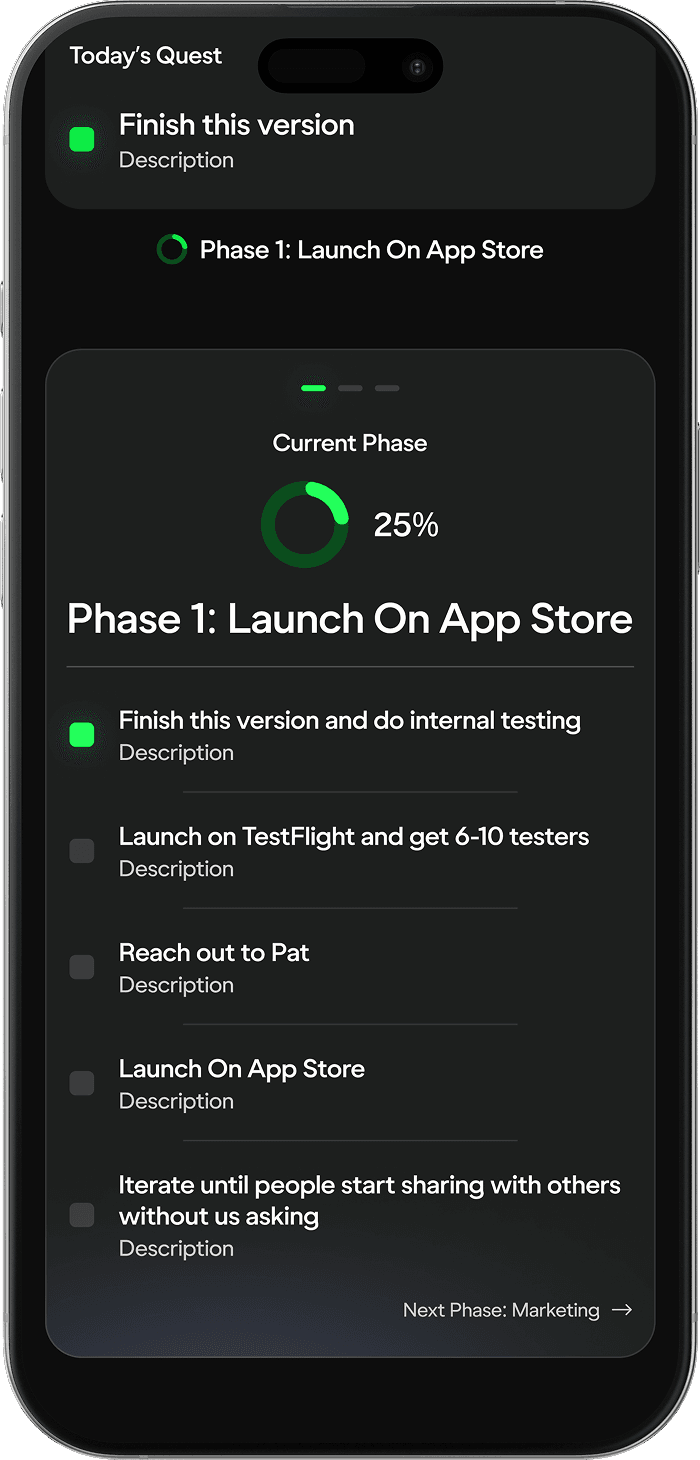
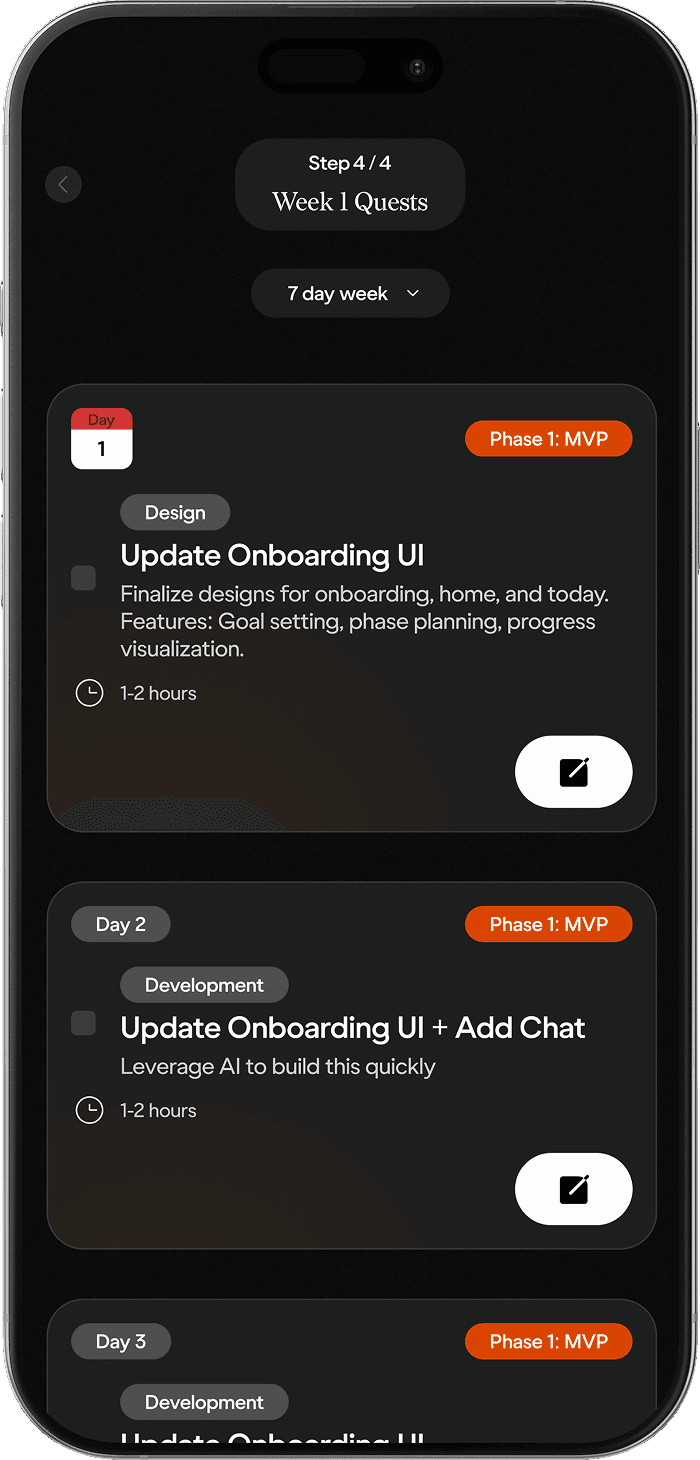
If I reframed the journal into milestones → daily tasks, users would feel a clearer sense of progress. Branding and polish would give the app legitimacy, making it easier to market and monetize quickly
While still wrestling with AI integration, I pivoted into design and branding. I built milestone components, progress bars, and redesigned flows so:
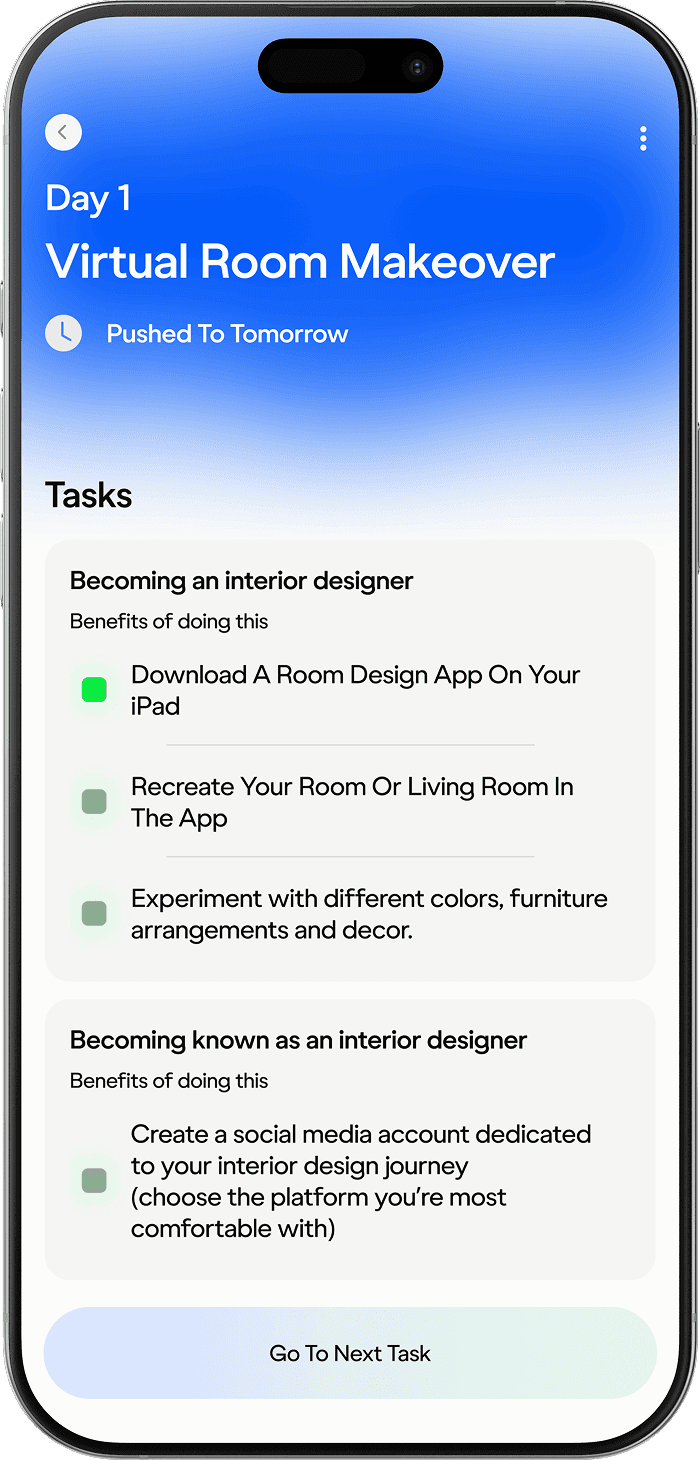
User sets one big goal → app breaks it into milestones → milestones break into daily tasks.
By month three, I had released no product, no real users, and not a single dollar made even though profit was supposed to be a top priority. I wanted Dreamers to help build dreams, but ironically, mine (staying in the US with an E2 visa) depended on making ~$100k quickly.
Those two forces collided, and I kept choosing my purpose over cutting corners for fast profit. I hadn’t realized that this choice would leave me stuck: building something beautiful but unvalidated, and feeling anxious about wasting time.
Purpose gives direction, but without validation and revenue, it can trap you in endless building. At this stage I learned that holding onto my values mattered but values alone don’t pay the bills or prove a product. Profit can’t be ignored; you need both purpose and a concrete user problem that creates demand.
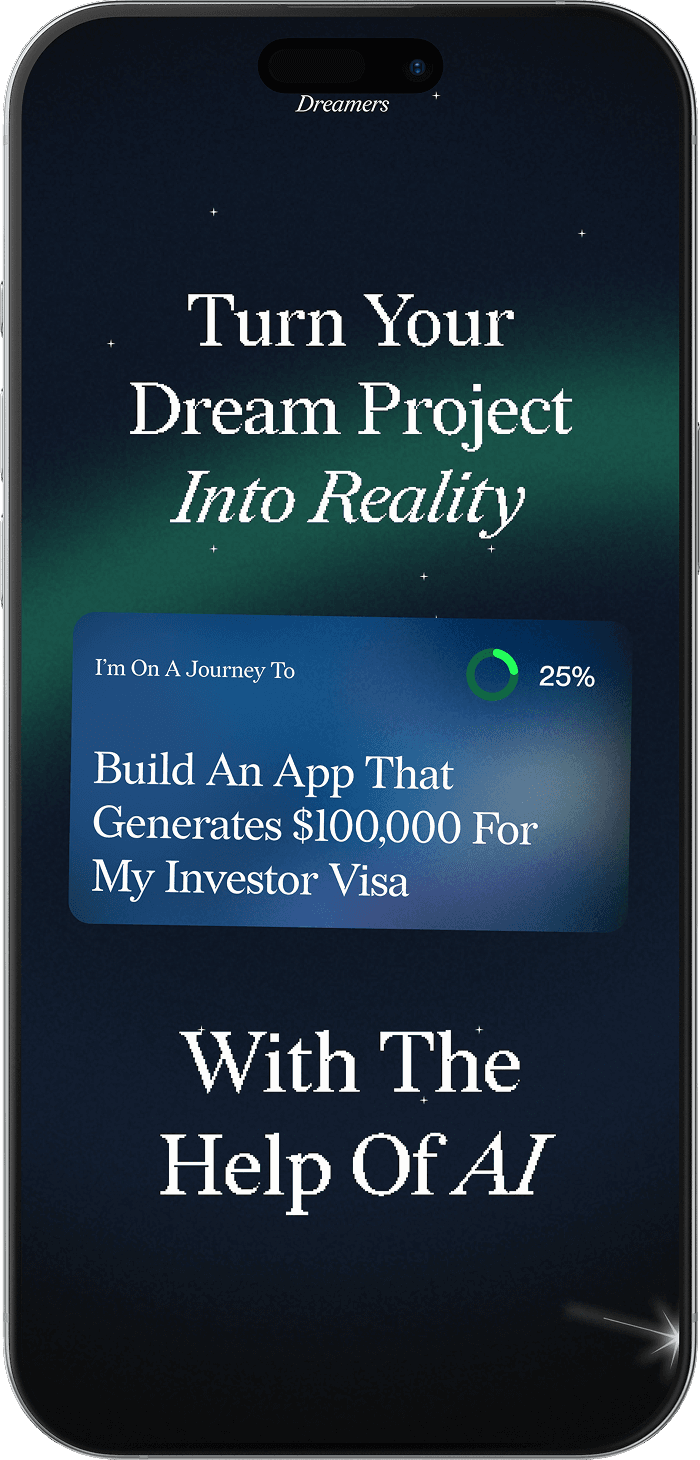
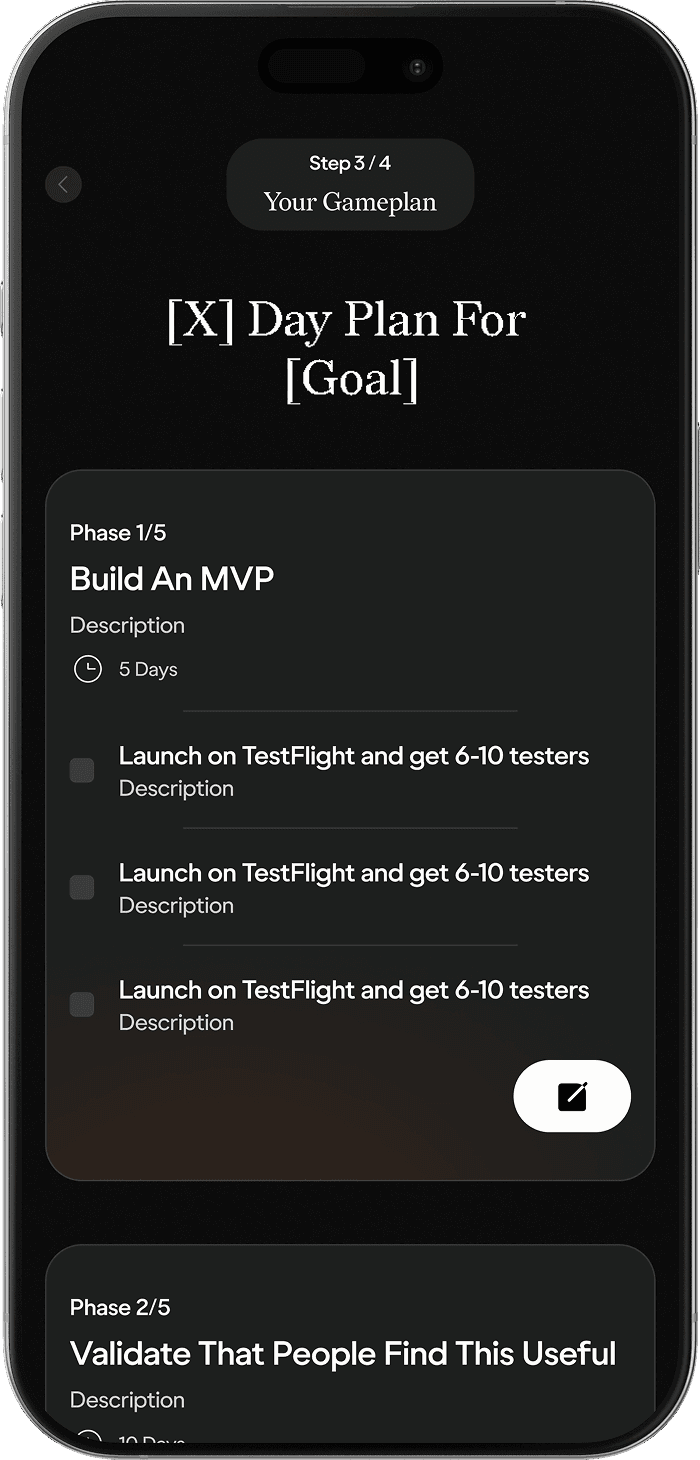
Viral Hook: Dreamer IDs
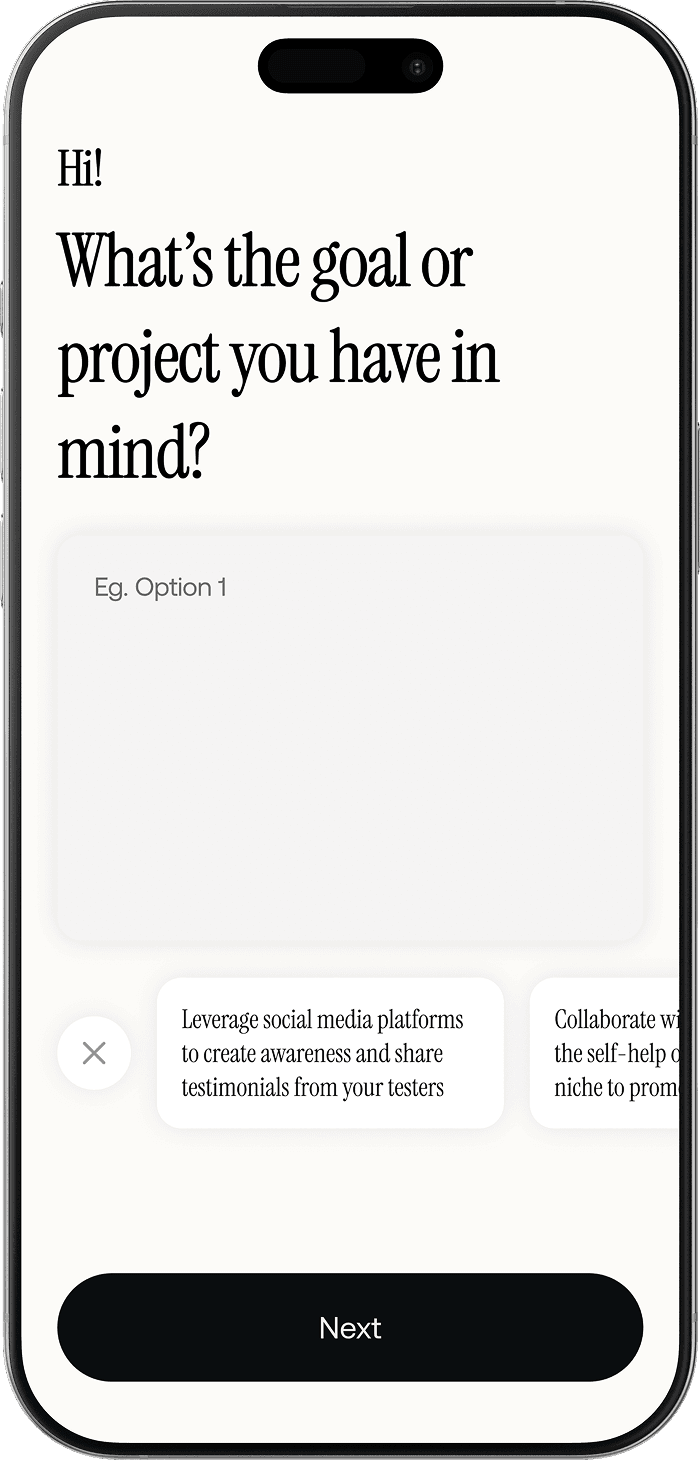
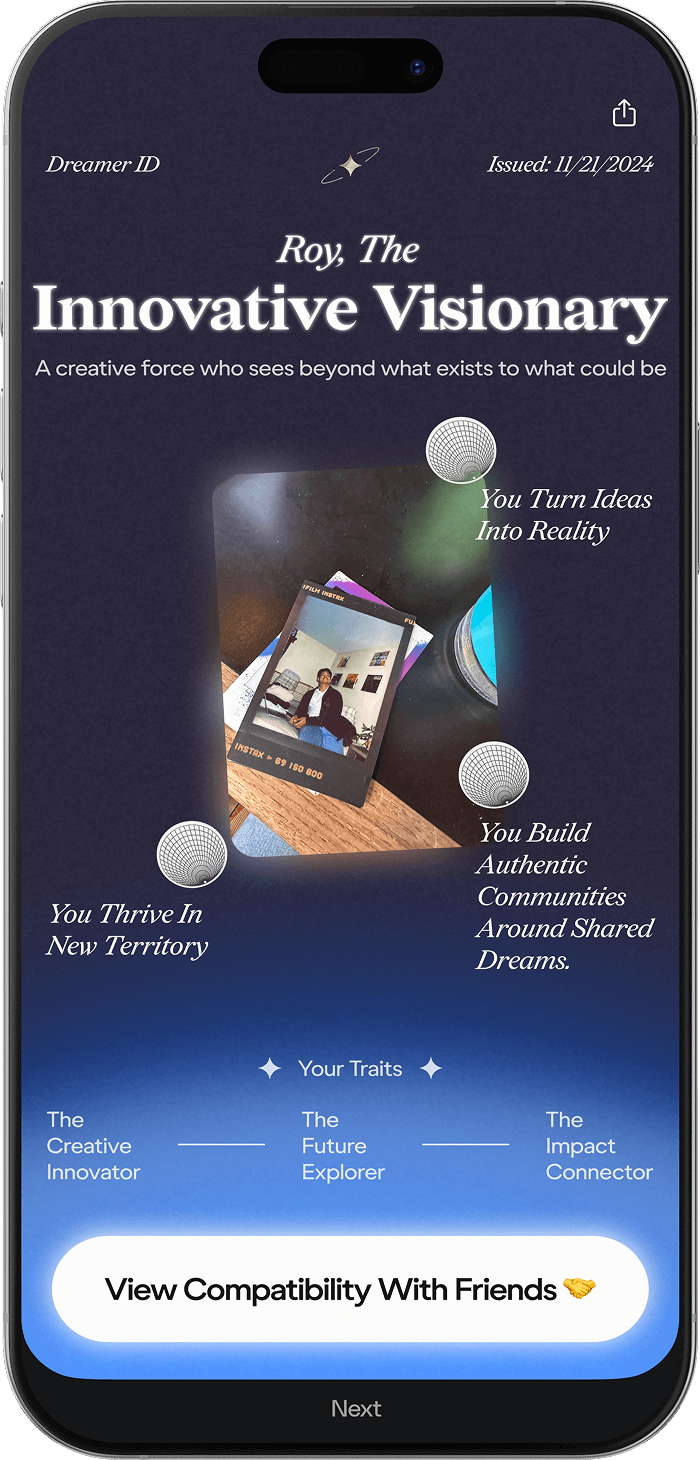
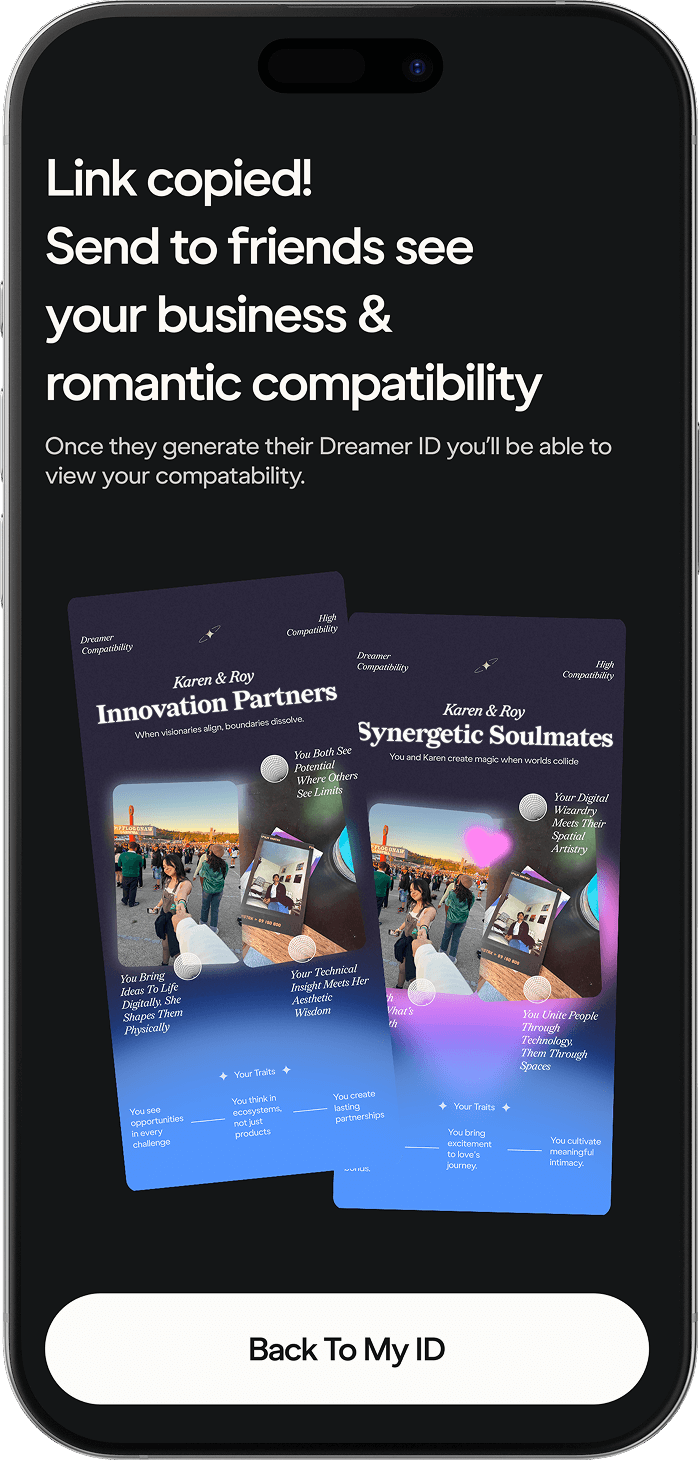
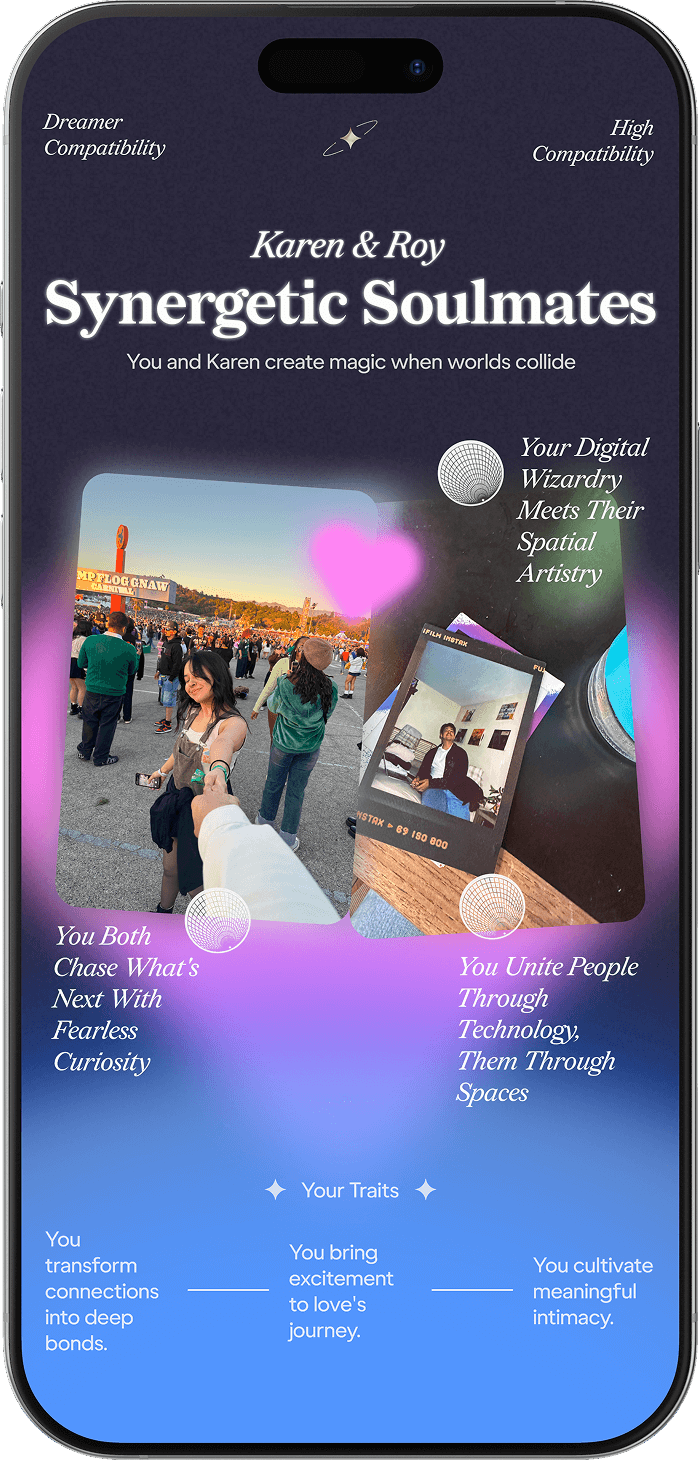
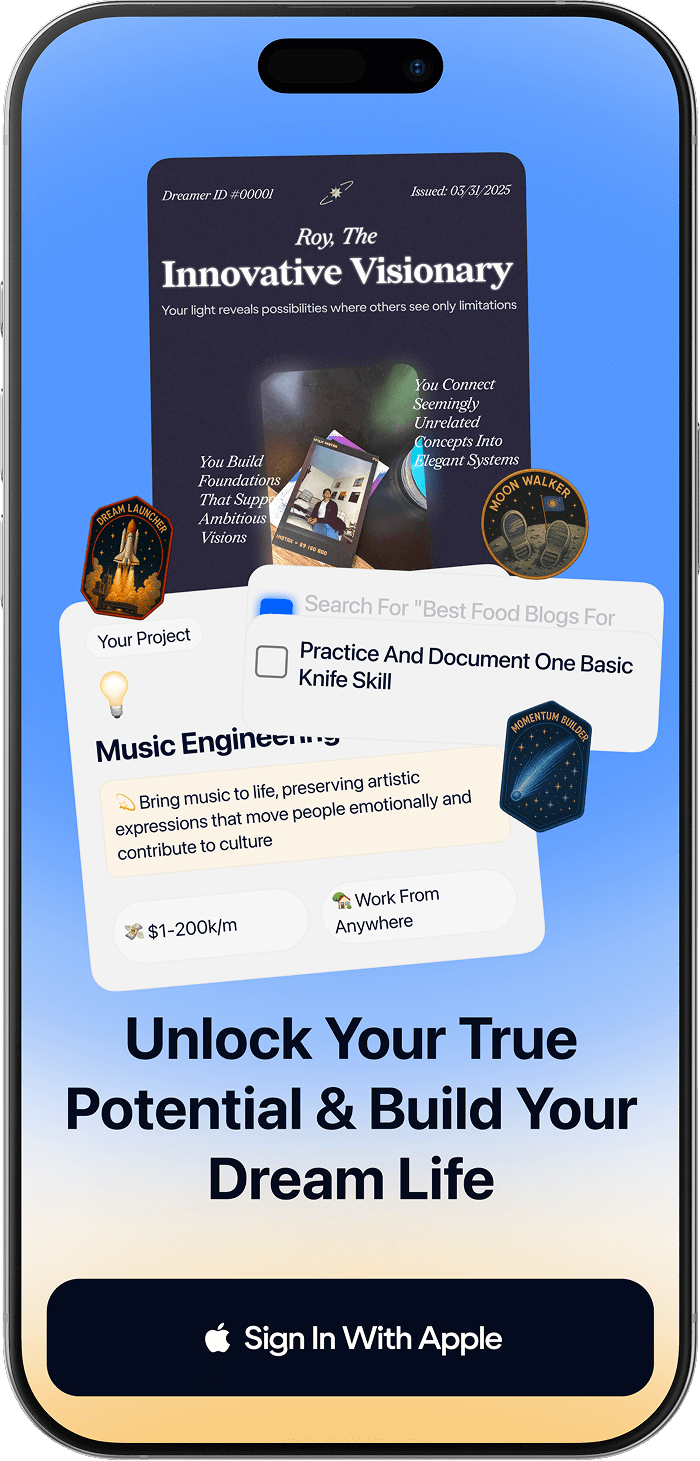
After reading a tweet thread from Hunter Isaacson about the importance of viral loops, I refined onboarding questions so the app could generate Dreamer IDs: short characterizations that highlighted your strengths and potential.
That shareability could make Dreamers the kind of product that blew up on TikTok.
The idea was you’d see your ID, feel seen, then share it with a friend. Compatibility checks could spark curiosity and conversation. In parallel, I kept positioning AI as the step‑by‑step guide but I still hadn’t actually shipped a working AI experience. I was trying to bake it all together into one app: Dreamer IDs + action plans + milestones + journaling.
As a standalone feature, Dreamer IDs might have gone viral. They were simple, visual, and shareable. But instead of letting it breathe on its own, I tried to fold it into the “master vision app.” The viral hook got buried inside a product that still hadn’t nailed its core value. I wanted virality and AI guidance and revenue, all in one, which left me with none of them.
Viral loops can amplify a product, but they can’t substitute for solving a real problem. Instead of obsessing about how to scale or make Dreamers “go viral,” I should’ve started with something painfully specific: helping my girlfriend (or my sister) make her dreams real. Then I could have mapped the flow based on what we did and I would’ve built something that actually worked.
Making It Pop
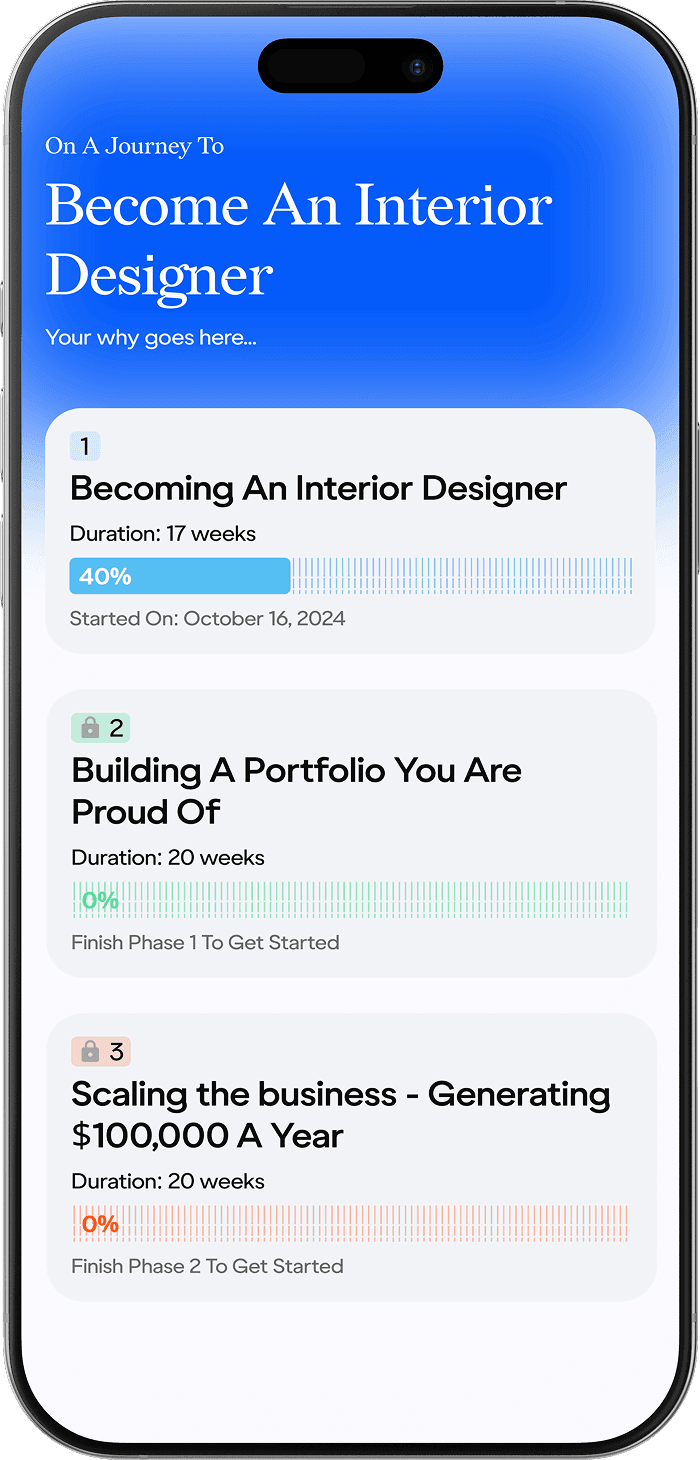
This phase wasn’t only about design it was personal. After the first four phases, I had been in the US with my girlfriend. But by the time Phase 5 started, I was back in Mexico, and the reality of our long‑distance hit like a wall. The pressure of my E‑2 visa and the $100k goal got sharper.
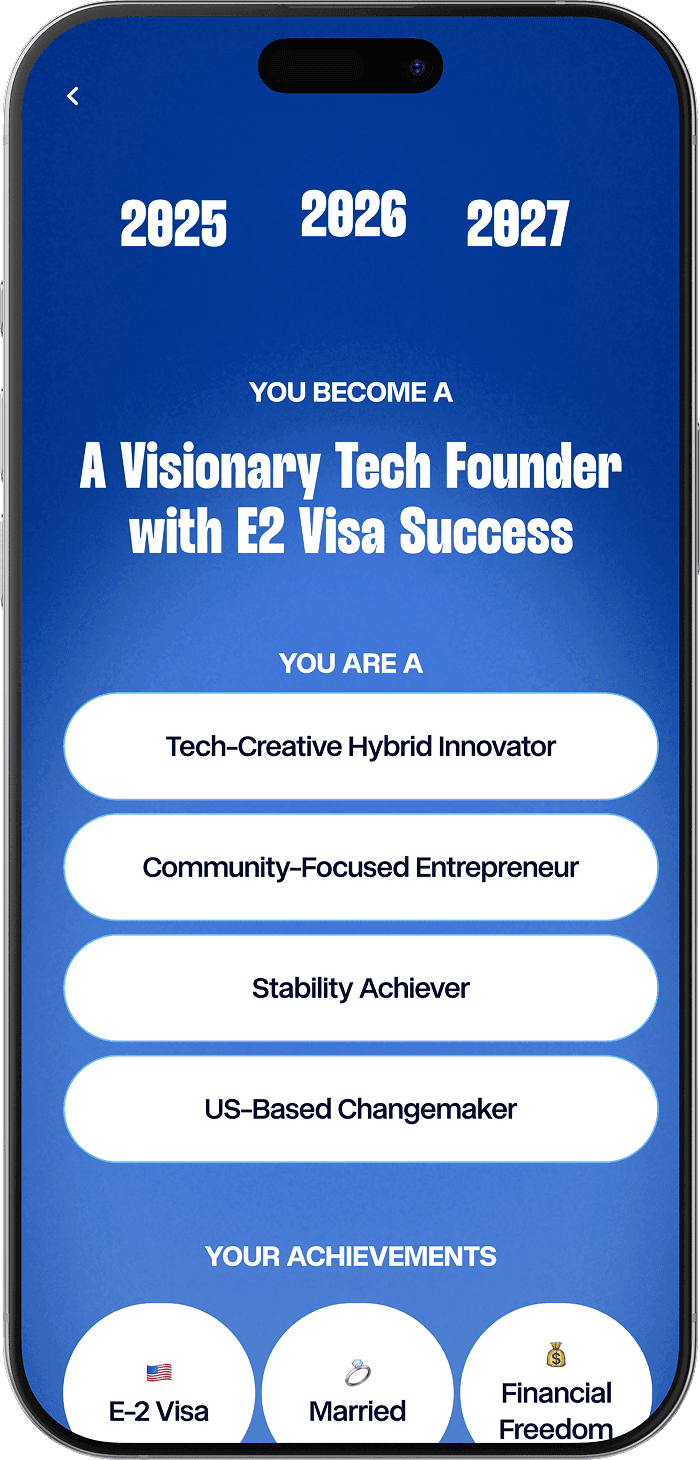
So, I doubled down. I wanted the app to pop to feel Gen Z, less text‑heavy, more story‑like. The onboarding was supposed to feel like a trip into the future, a glimpse of the life you were building toward. If I could make it exciting enough, I thought maybe this could be the push to finally turn Dreamers into real money.
But I massively underestimated how hard this was. Everyone has different paths, dreams, and values. Trying to capture every possible journey in one flow? Way too big. Instead of narrowing in, I widened the scope even further.
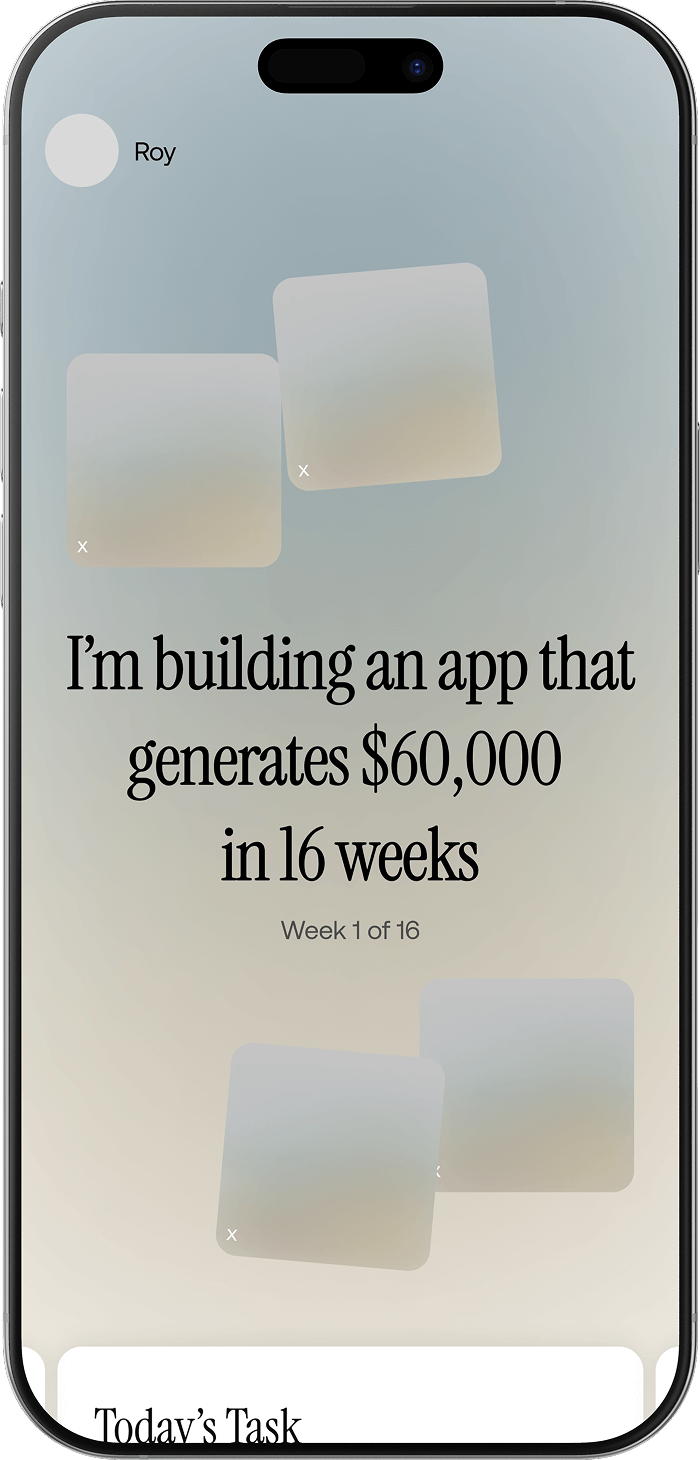
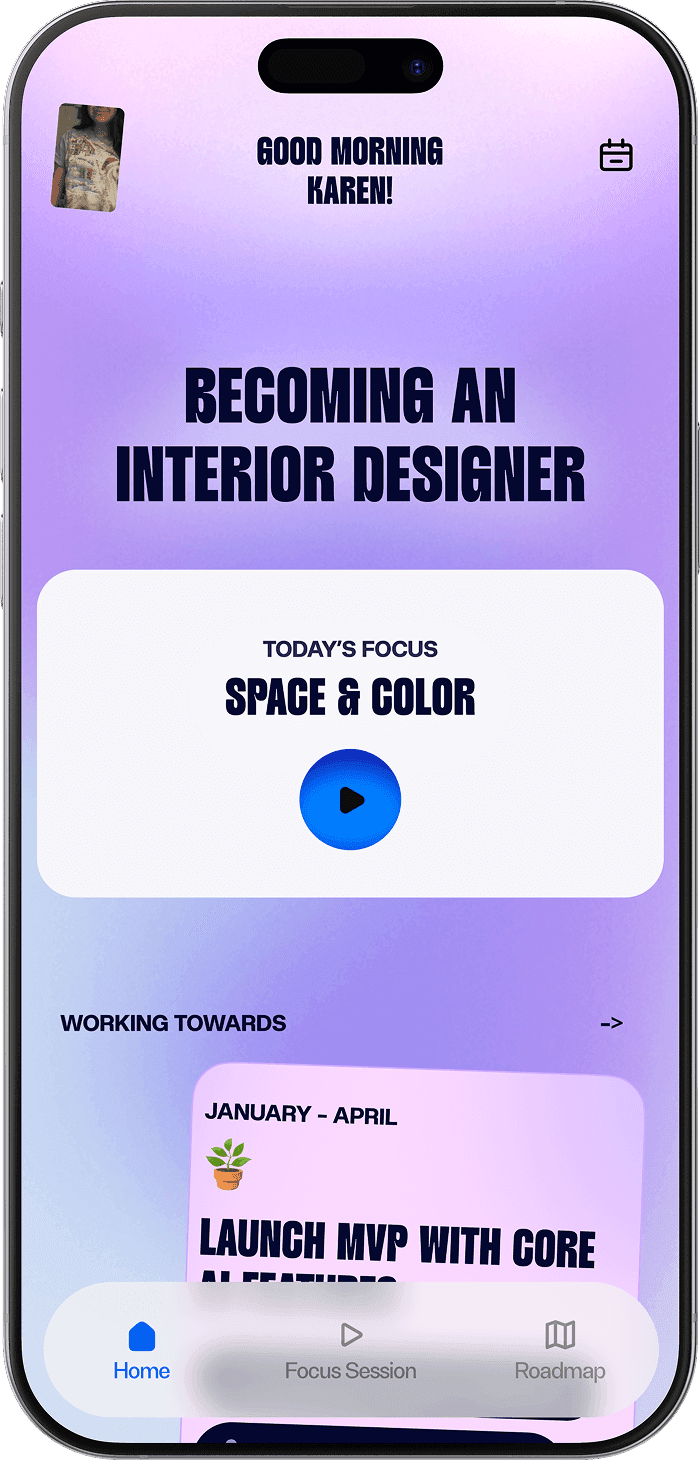
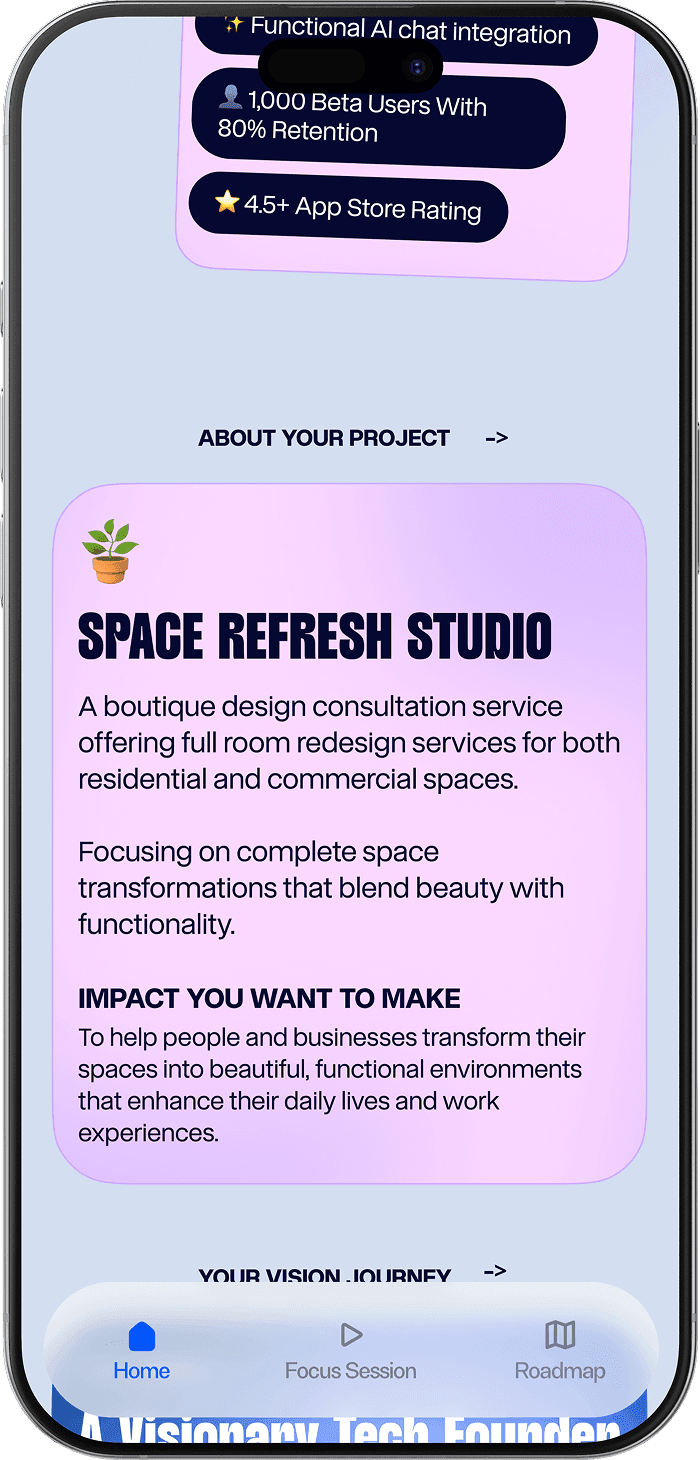
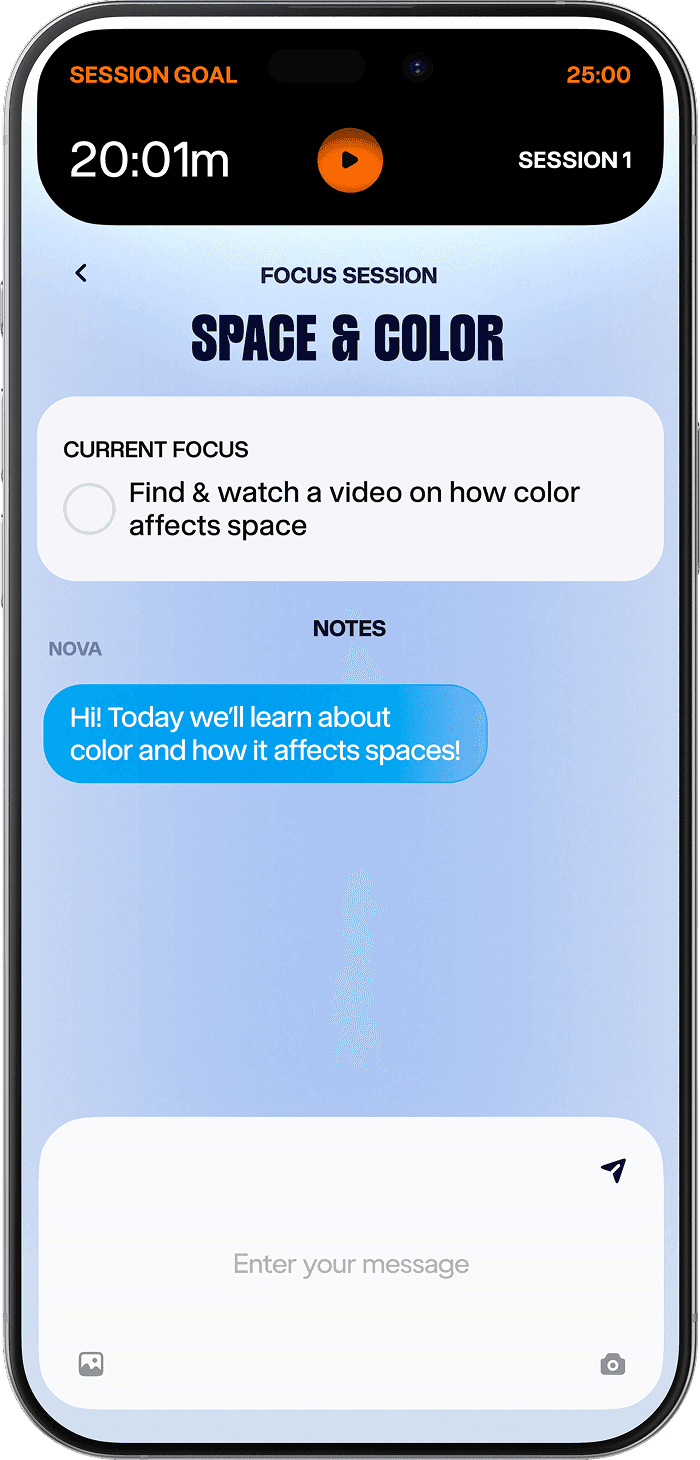
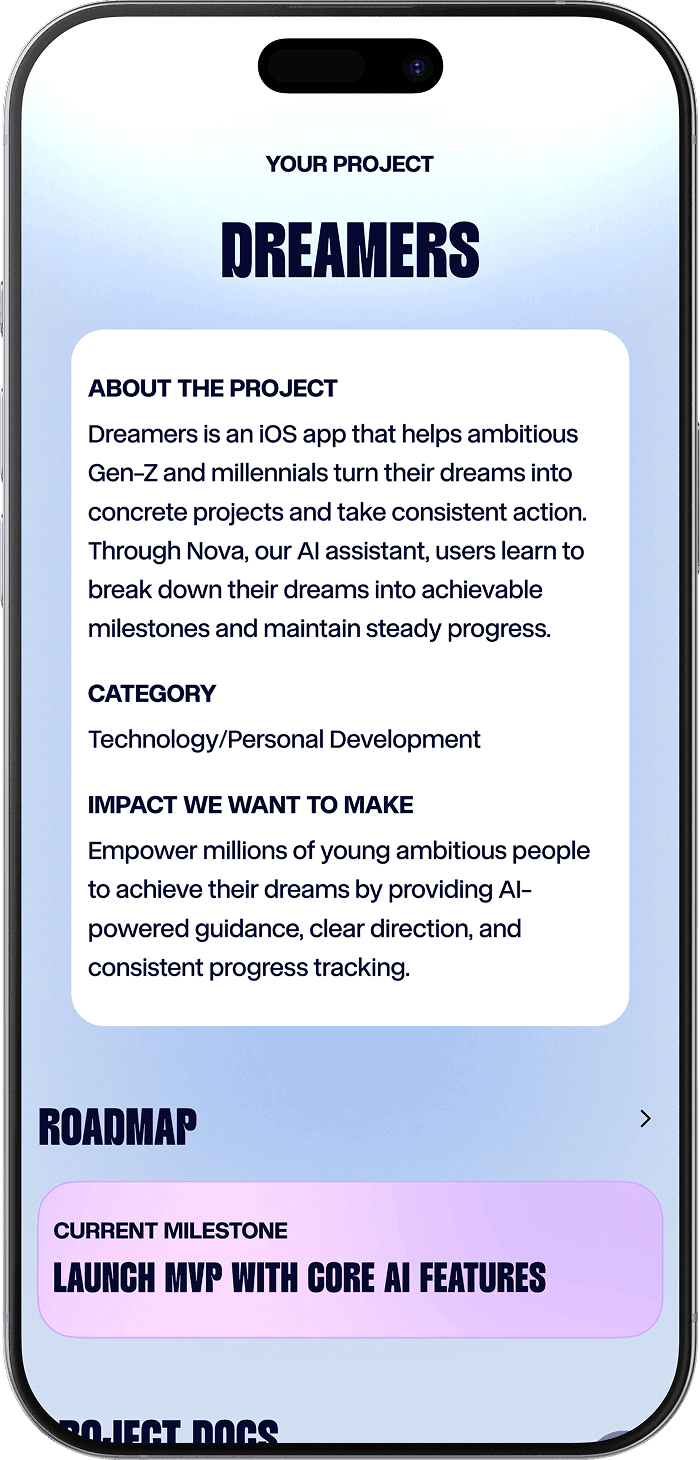
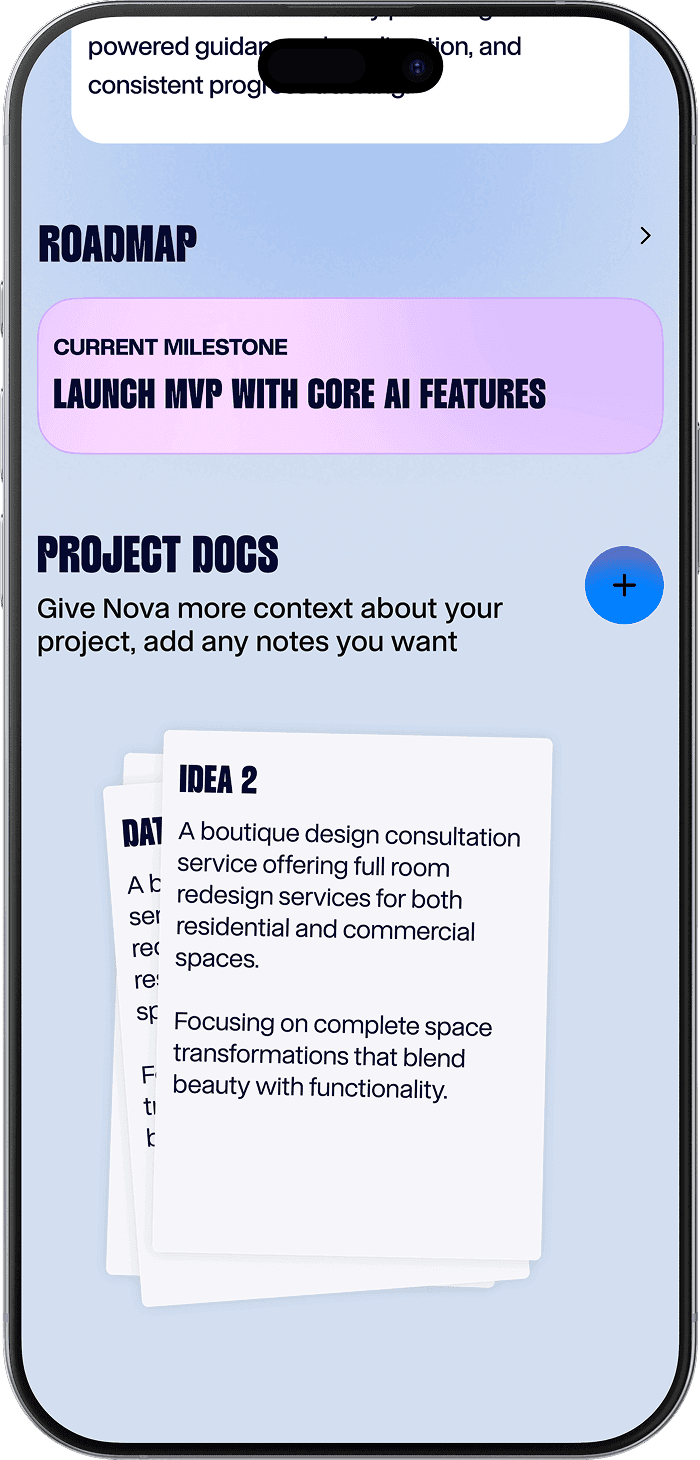
The app at this stage looked like this: • Your focus for today: one simple task connected to your bigger vision • Milestones tracker: break down long‑term goals into smaller chunks • Project tab: a place to store ideas and define the impact you wanted to make Daily focus sessions: Pomodoro or 90‑minute modes, with AI guiding you
It checked all the boxes of a “future‑self” productivity app but the foundation was still shaky.
Instead of proving value by helping even one real person (like my girlfriend) chase a dream successfully, I kept trying to design the dream‑chasing system for everyone.
When stakes are high, it’s easy to confuse urgency with clarity. But branding, polish, and story‑driven design can’t shortcut traction. What I really needed was to solve one person’s problem first, then productize it, and only then sell it.
Most People Don’t Know What They Want
By March, I still hadn’t launched anything. My girlfriend visited Mexico for the first time, and since we’re long‑distance, I let myself enjoy being with her. I carved out a couple hours a day for focus sessions.
That space gave me a big realization: a lot of people don’t actually know what they want in life. And those were the people I was targeting. Up until now, I had assumed users already had a dream or project in mind that they just needed structure. But the truth was they were missing clarity itself.
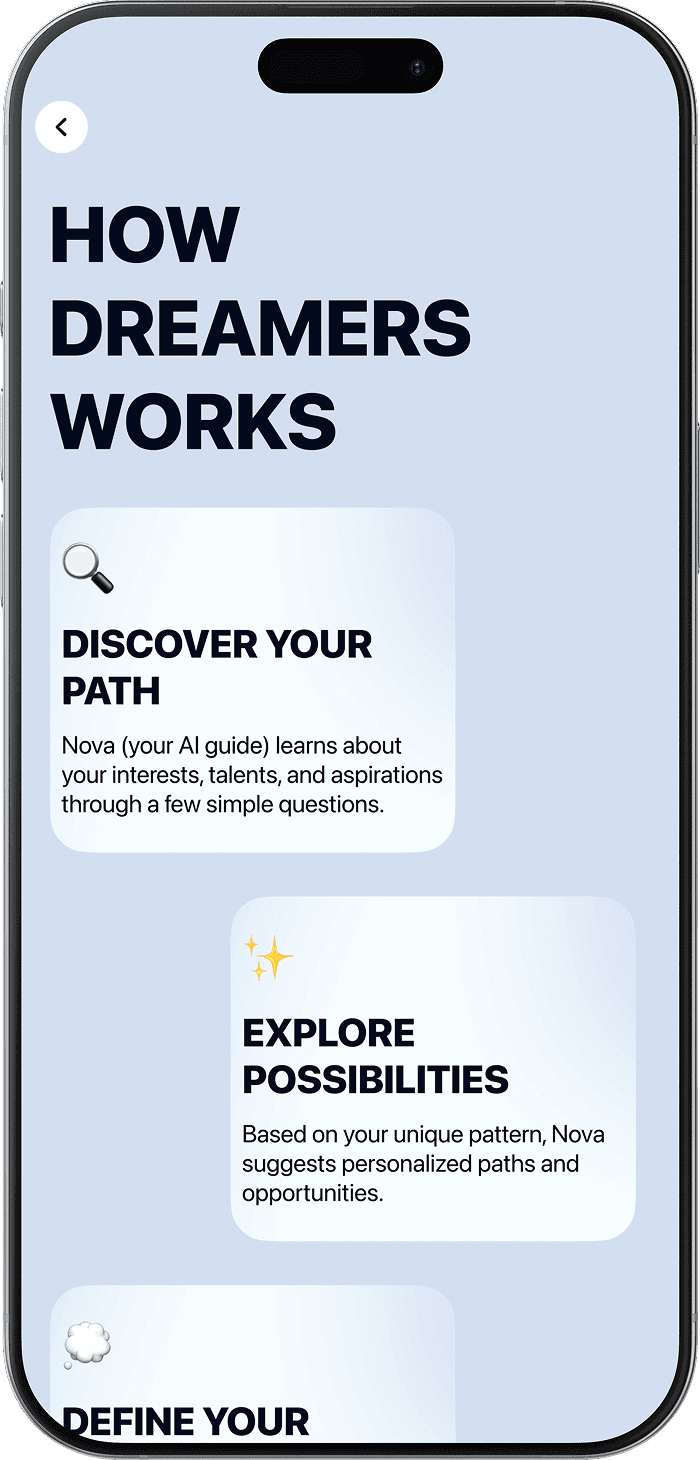
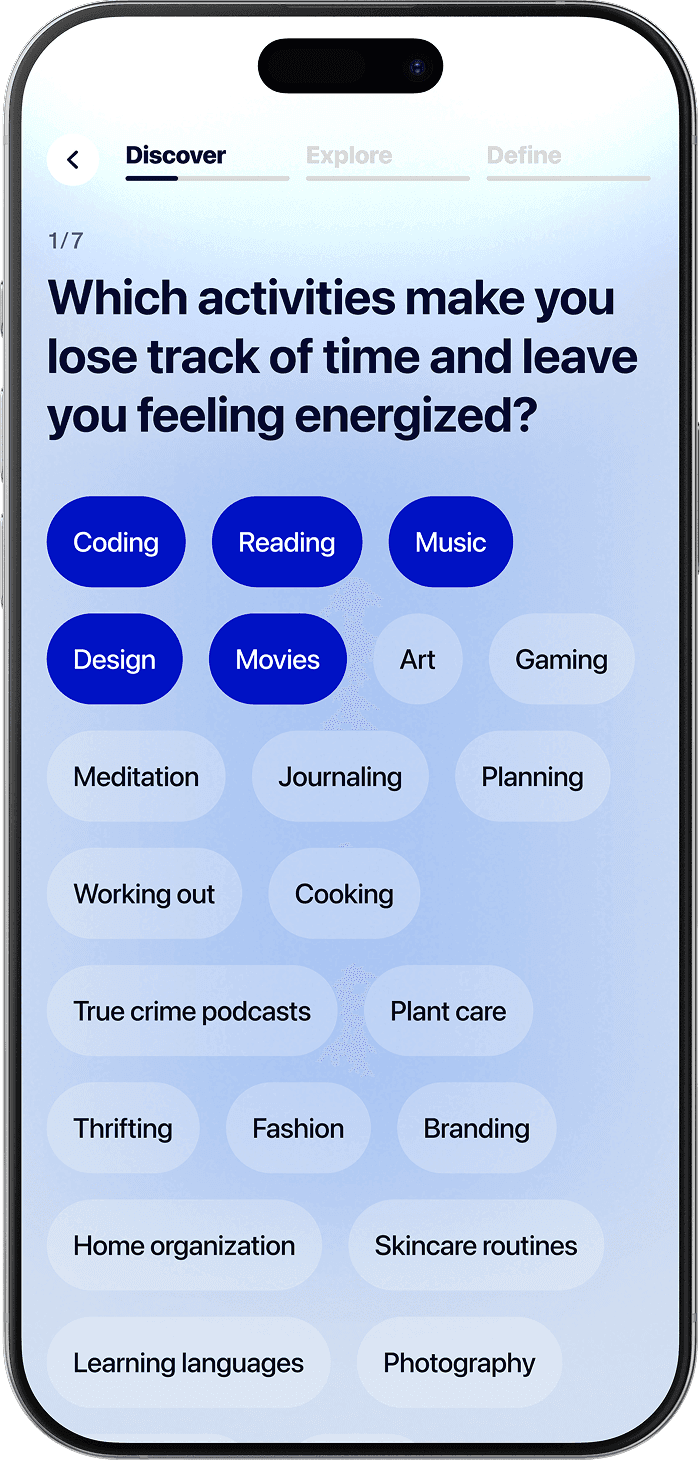
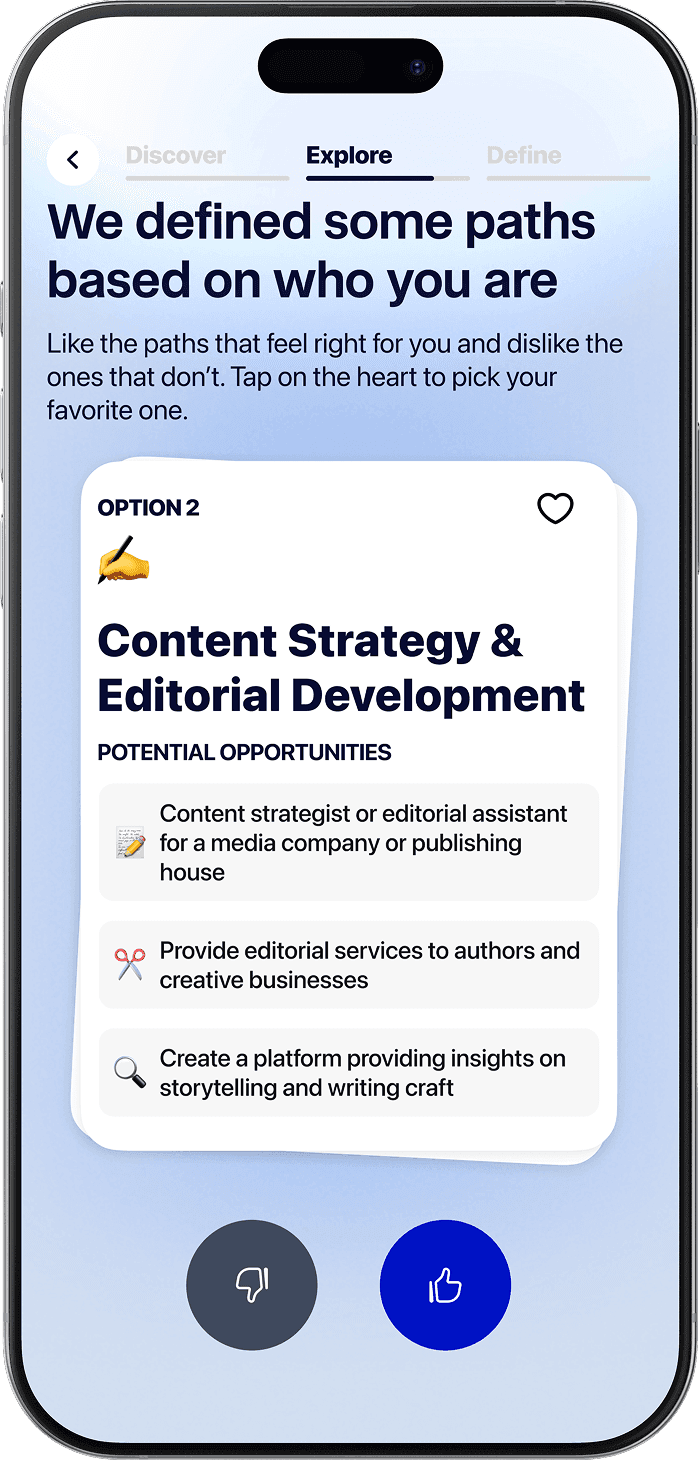
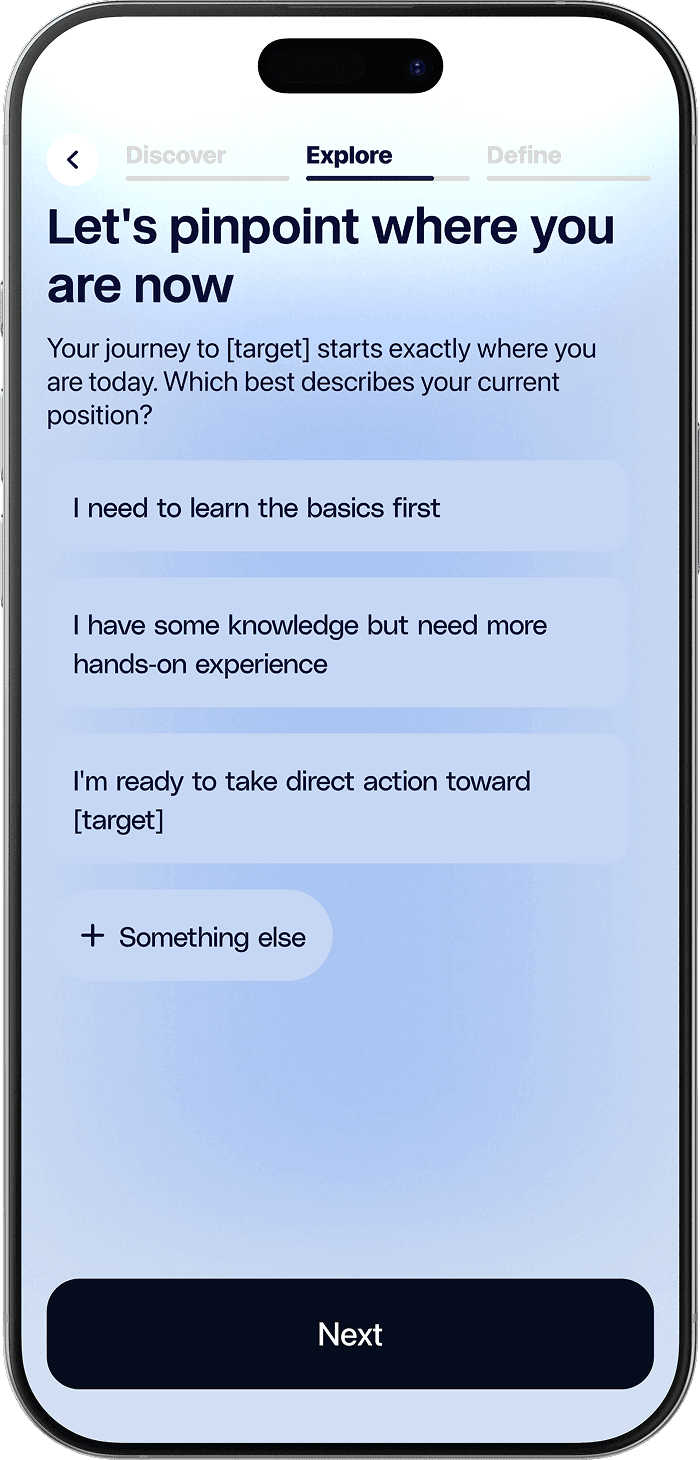
So Dreamers started leaning into discovery first: • Asking questions to get to know you • Suggesting possible paths • Getting to know your current situation • Then guiding you toward milestones and first steps.
Kind of a bridge between clarity and action.
This felt like an emotional “aha,” but it also made the product even harder to define. The more I tried to solve “being lost in life,” the vaguer it got. And when I thought about Maslow’s hierarchy, I realized: I was aiming too high on the pyramid. Self‑discovery is meaningful, but not urgent.
People don’t usually pay for clarity they pay for survival, safety, income. Meanwhile, I was the one with urgency: I needed profit now to secure an E‑2 visa.
Not every problem translates into a business especially when urgency is mismatched. Self‑discovery may be powerful, but it feels like something that should be free if the goal is helping millions. Profit comes from solving problems people can’t afford to ignore.
Fuck It, Launch Now
Once I got back to the US, I told myself: enough waiting. I needed to make money. By this point, I’d gone about three months without income, and even before that I was barely pulling in $1k/month. The pressure was real E‑2 visa looming, long‑distance pain building, savings gone.
So I forced the product into the world. The flow mirrored my original idea:
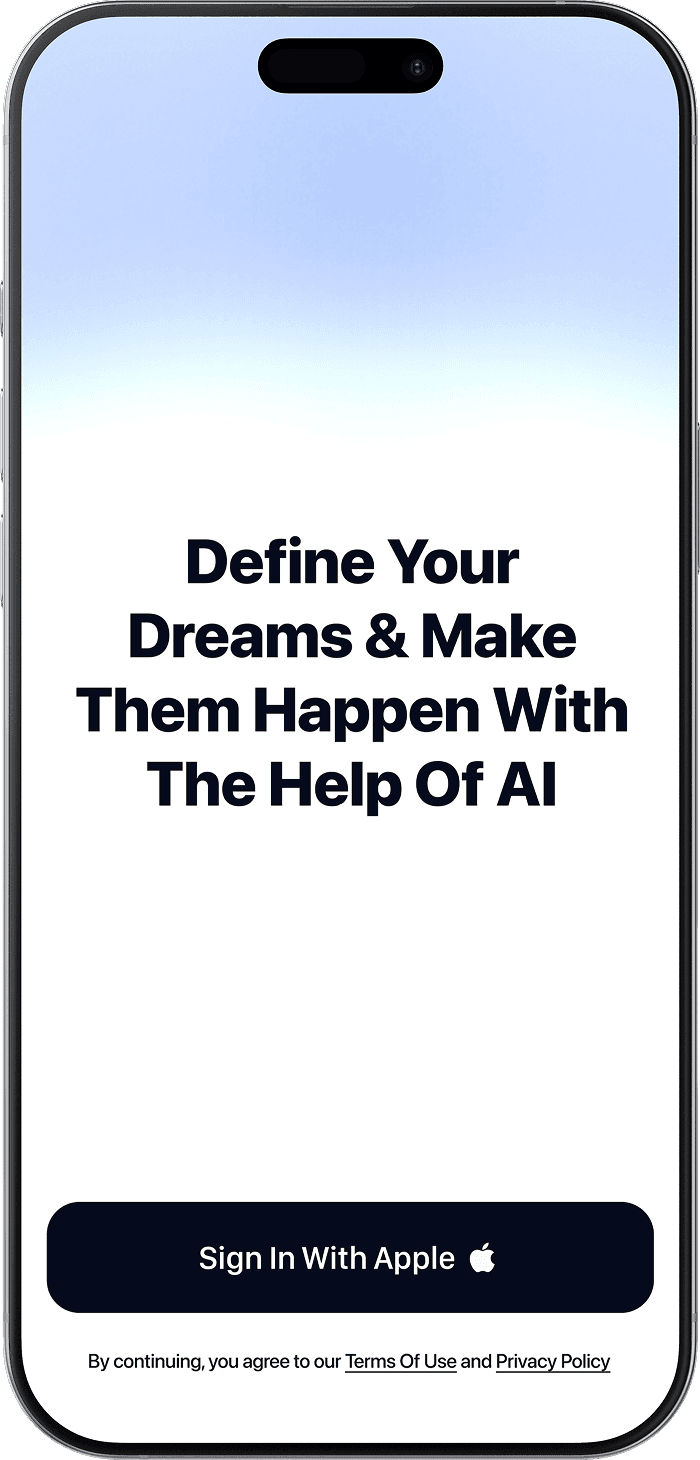
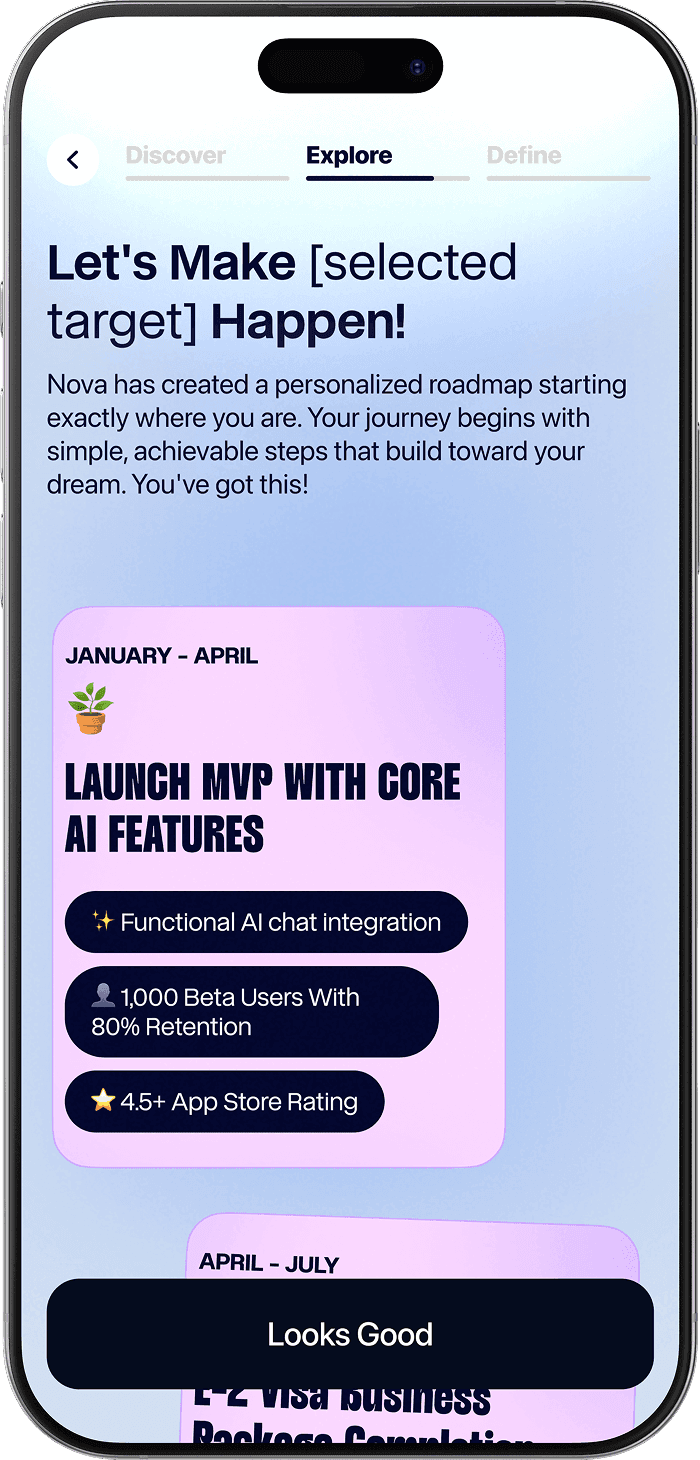
• Asking questions to get to know you • Get AI generated ideas and pick the one you’re excited about • Getting to know your current situation • Then guiding you toward milestones and first steps. • Move forward week by week. • At the end of each week, do a review. • Next week’s plan would auto‑adjust based on that reflection
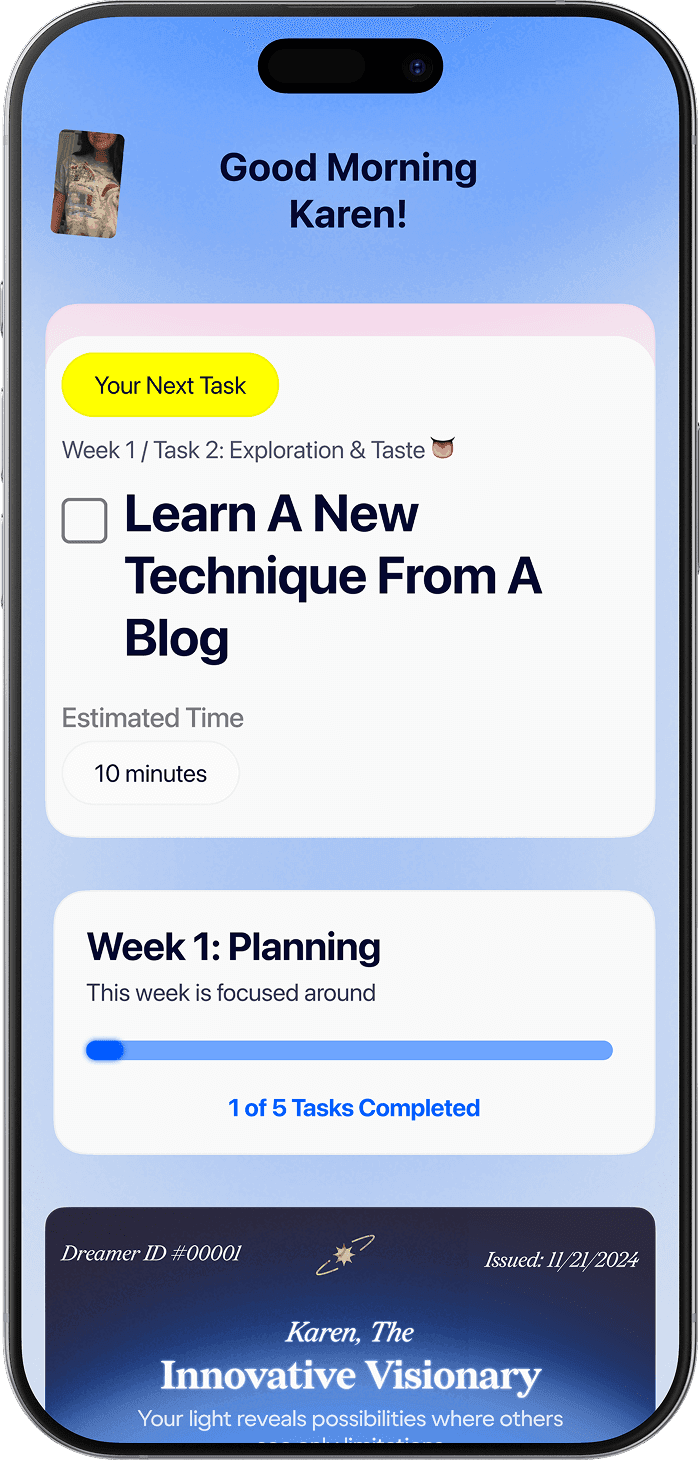
Basically, an adaptive to‑do system powered by AI. For the first time, Dreamers was live.
But I didn’t stop there. To validate fast, I went hard on marketing: • Hired two UGC creators posting 5 videos each per week • Contracted a UGC agency that blasted out 90 videos in just two weeks
I was burning money trying to brute‑force traction, hoping hype could validate the product.
But the app didn’t stick with users, the videos didn’t convert, and instead of making money I was just setting it on fire. I learned the painful truth: “fuck it, launch” doesn’t work if the thing you’re launching still doesn’t solve a painful, specific problem.
And it hurt. Because this wasn’t just a side hustle to me Dreamers felt like my life’s calling. A product that helps people make their dreams come true… why wouldn’t that work? At the time it felt unfair, almost like rejection from destiny. Looking back, I can see why the app wasn’t solving a specific, urgent pain but in that moment it was crushing. It felt like shouting into the void, with nothing echoing back.
Urgency and calling don’t guarantee traction. You can believe in something with your whole chest and still be wrong about the execution. Launching is still non‑negotiable but launching the wrong thing just turns faith into burn.
Stripping It Down
After the agency burst (90 videos in 2 weeks), we ended that experiment, but I kept the two UGC creators posting. That gave me my first small wave of real users finally, some data. And even though traction wasn’t strong, I didn’t see it as a flop. To me, it was market validation: people were engaging enough to show me where the product broke down.
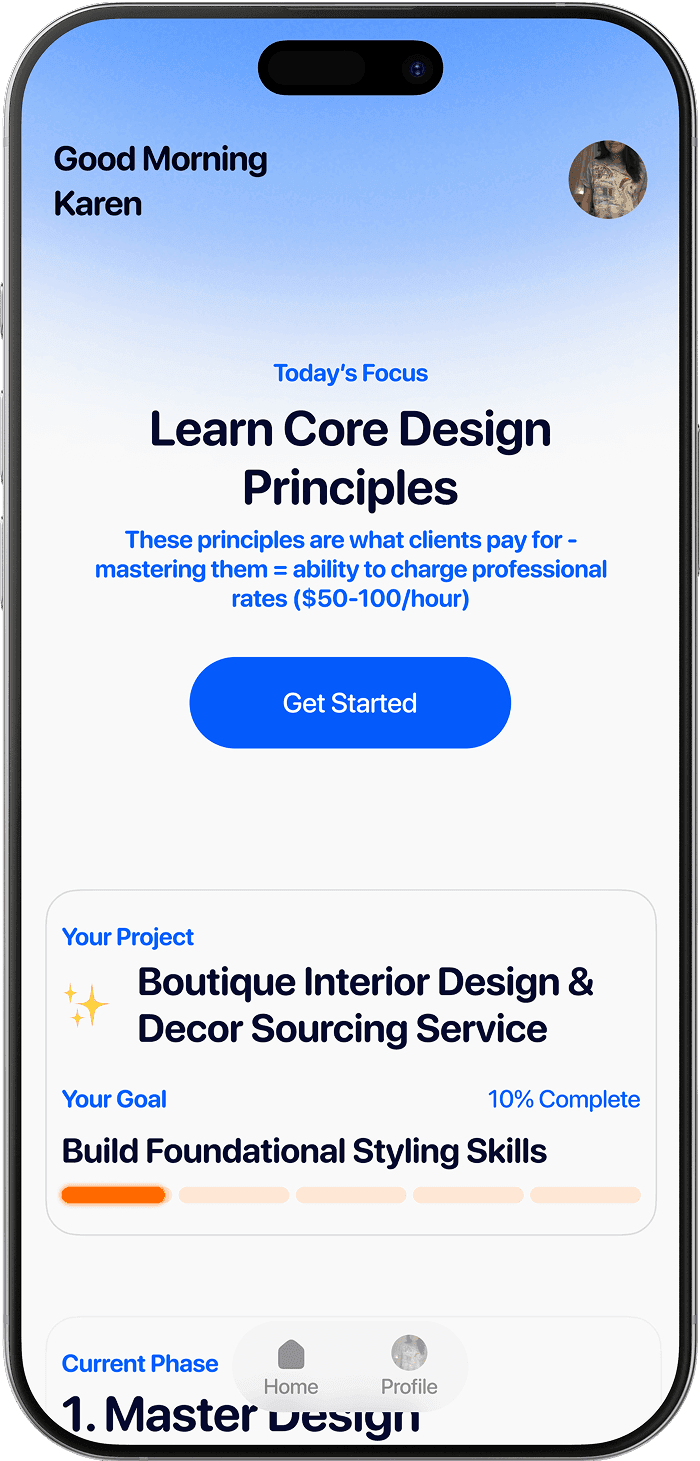
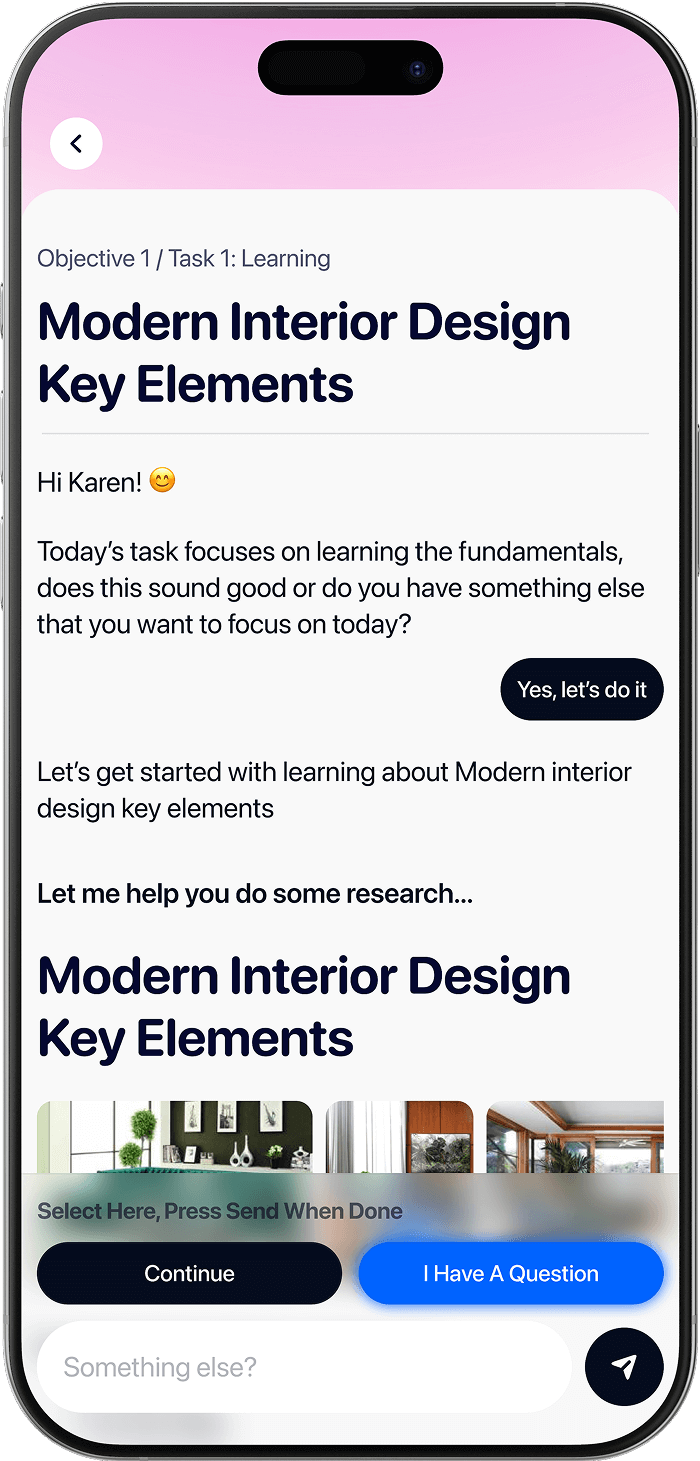
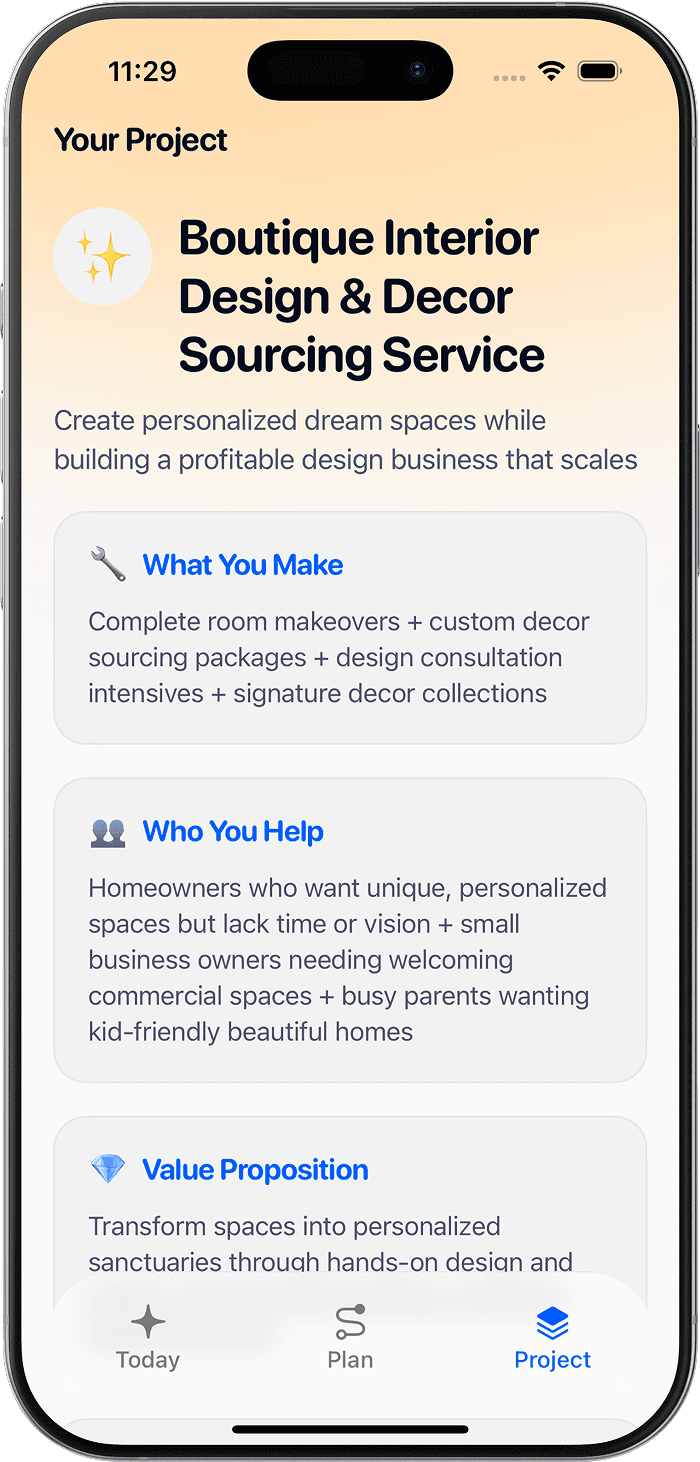
What I saw: most users were getting glossed over or stuck during onboarding. So I pivoted pragmatically. I trimmed weight:
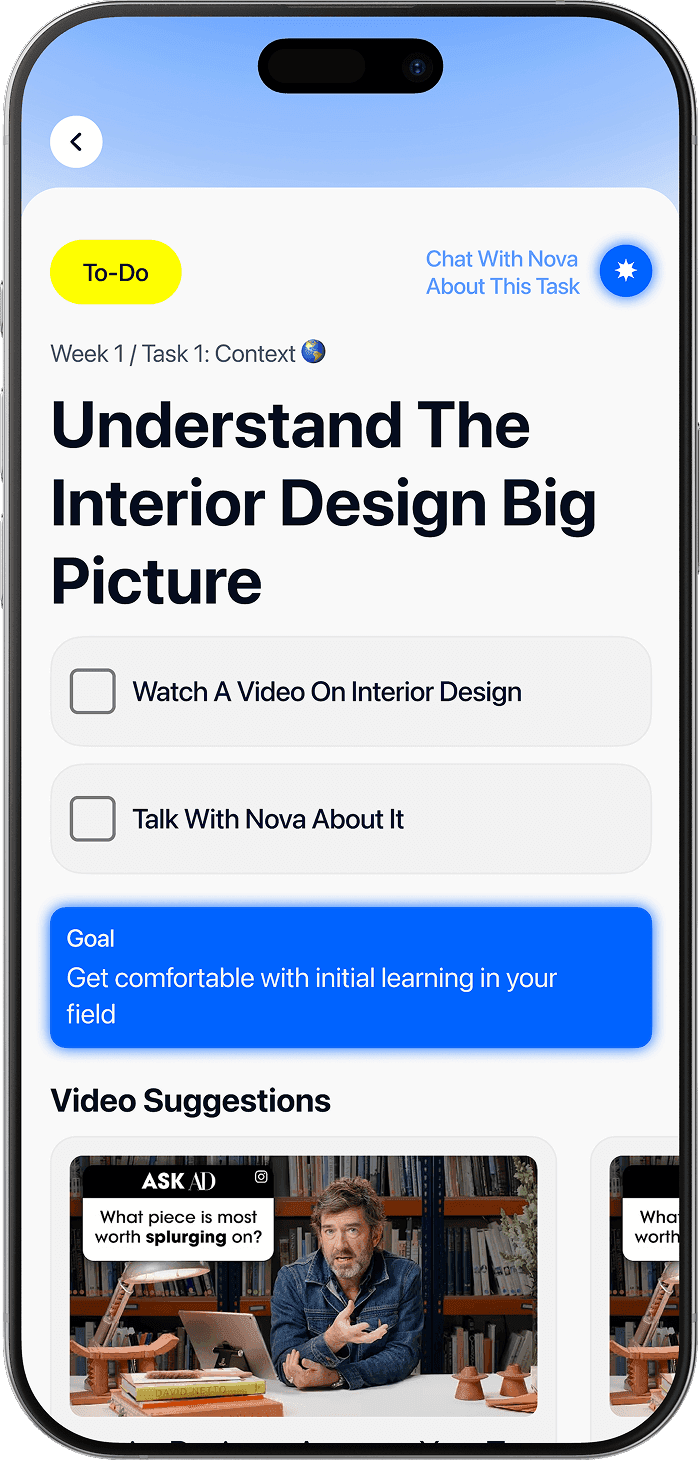
• Cut weekly plans and reviews (predicting a whole week was overkill). • Reframed the flow into something much simpler: pick a project, choose a starting point, then just get one task a day.
It instantly felt cleaner, lighter, and more adaptable to where someone was in their journey.
This was my leanest and most usable version yet. But traction still didn’t budge. Users got through more easily, but they still weren’t sticking around or paying.
Pragmatic iteration matters. Simplifying the experience was progress — but simplification alone doesn’t guarantee adoption. At this point, I still thought the issue was execution. I hadn’t yet realized the deeper problem: Dreamers was trying to be too much, for too many people. That truth would only hit me in the next phase.
Key Realization: Target everyone, hit no one
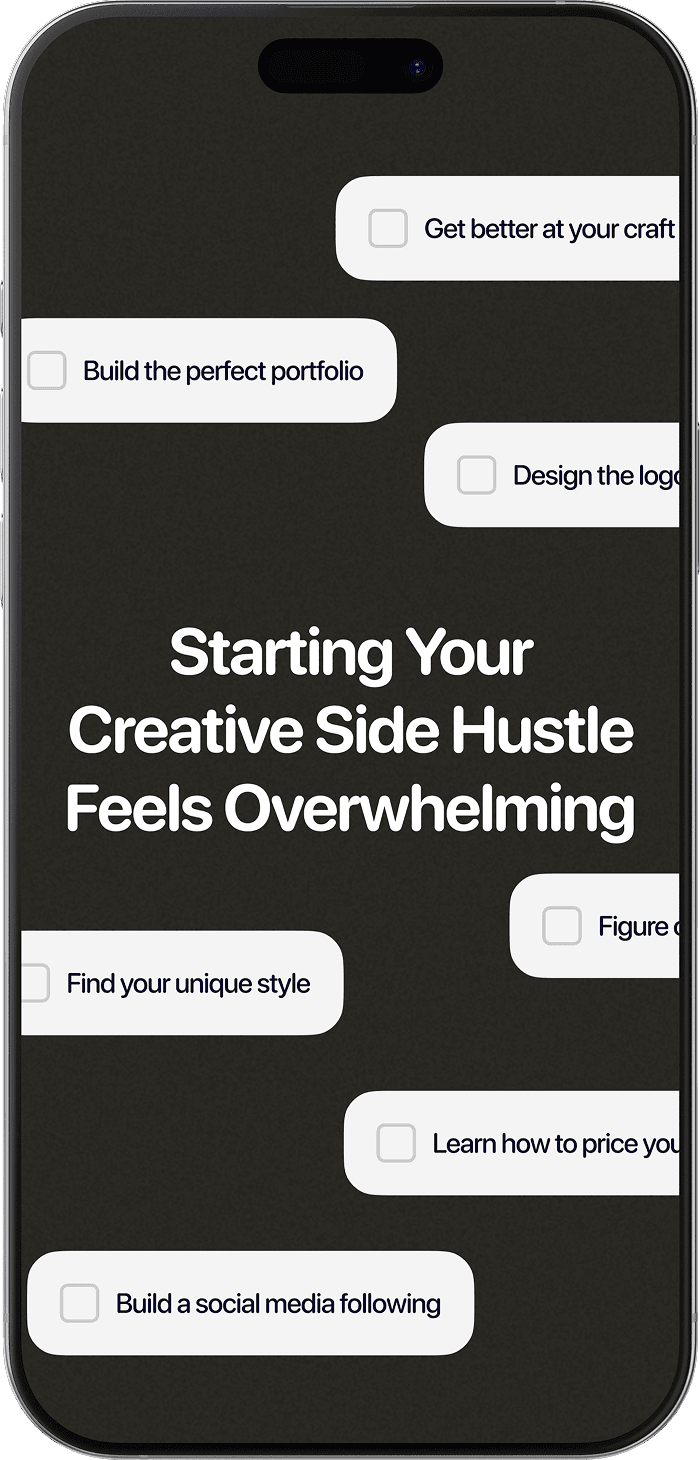
By this point, the truth smacked me in the face: I was trying to build Dreamers for everyone, which meant I was building it for no one.
Too many audiences. Too many scenarios. Too much pressure on AI to magically produce the right guidance for anyone who opened the app. It was unsustainable, especially as a solo founder.
And the funny thing is that before Dreamers and before Woosh, I freelanced building marketing websites. I used to tell my clients all the time: “If you target everyone, you hit no one.” I believed it when I advised them. Yet in my own work, blinded by my mission to “help people make their dreams come true,” I ignored it. I wanted to build something that could save everyone.
The pivot here was to stop thinking in abstract universals and draw directly from my own experience. I had figured out how to make money doing things I loved: design, development, and strategy. That was a track record. I’d built confidence in my skills, tested them with real clients, and turned them into income.
So this time, I grounded Dreamers in something real: my own process for freelancing. Specifically, how I figured out how to make money doing what I love (designing, developing, solving growth problems for startups). I mapped it out step‑by‑step into what I called:
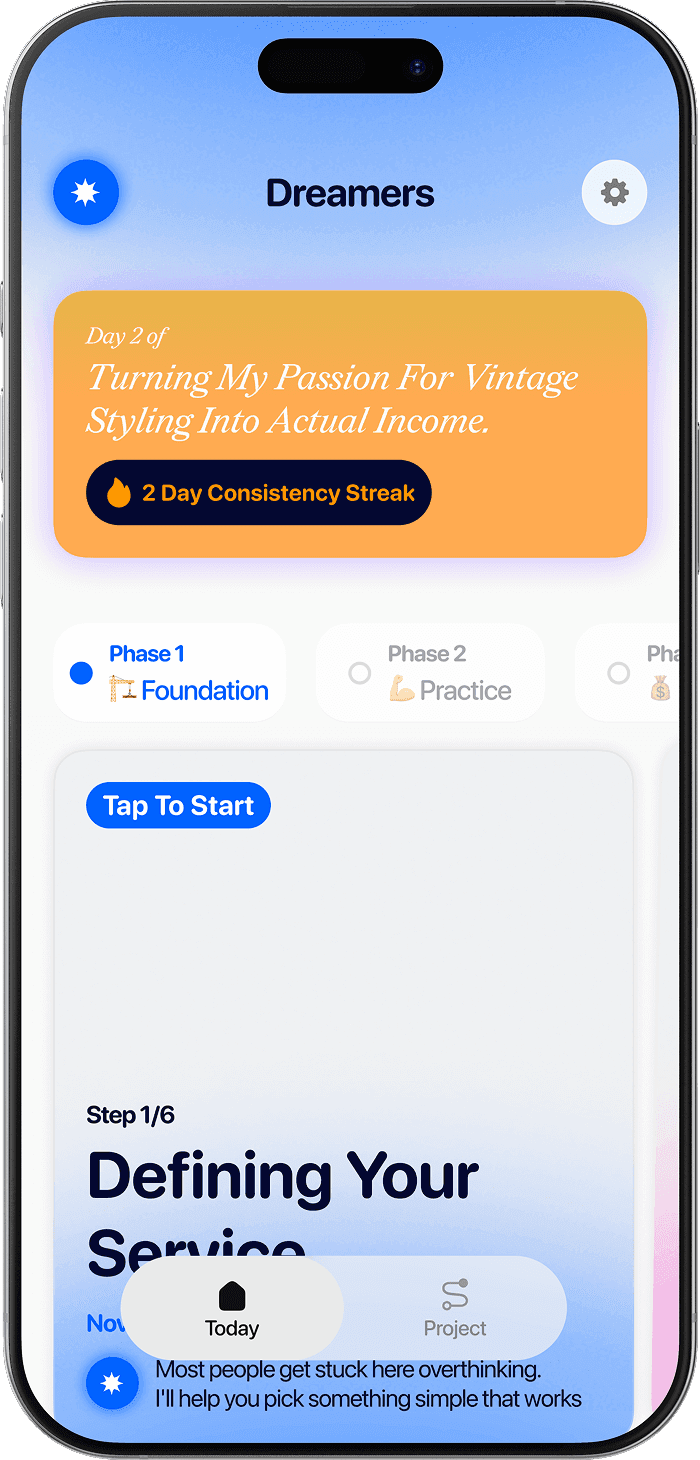
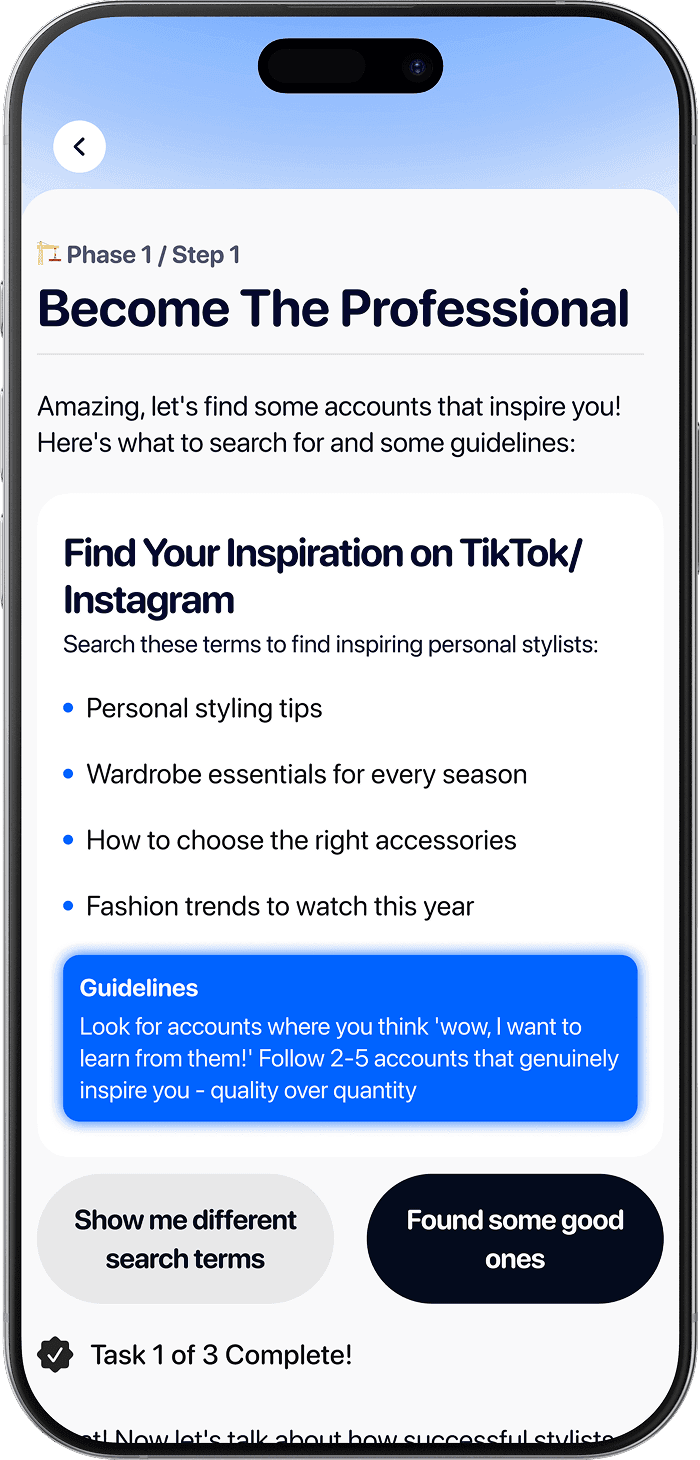
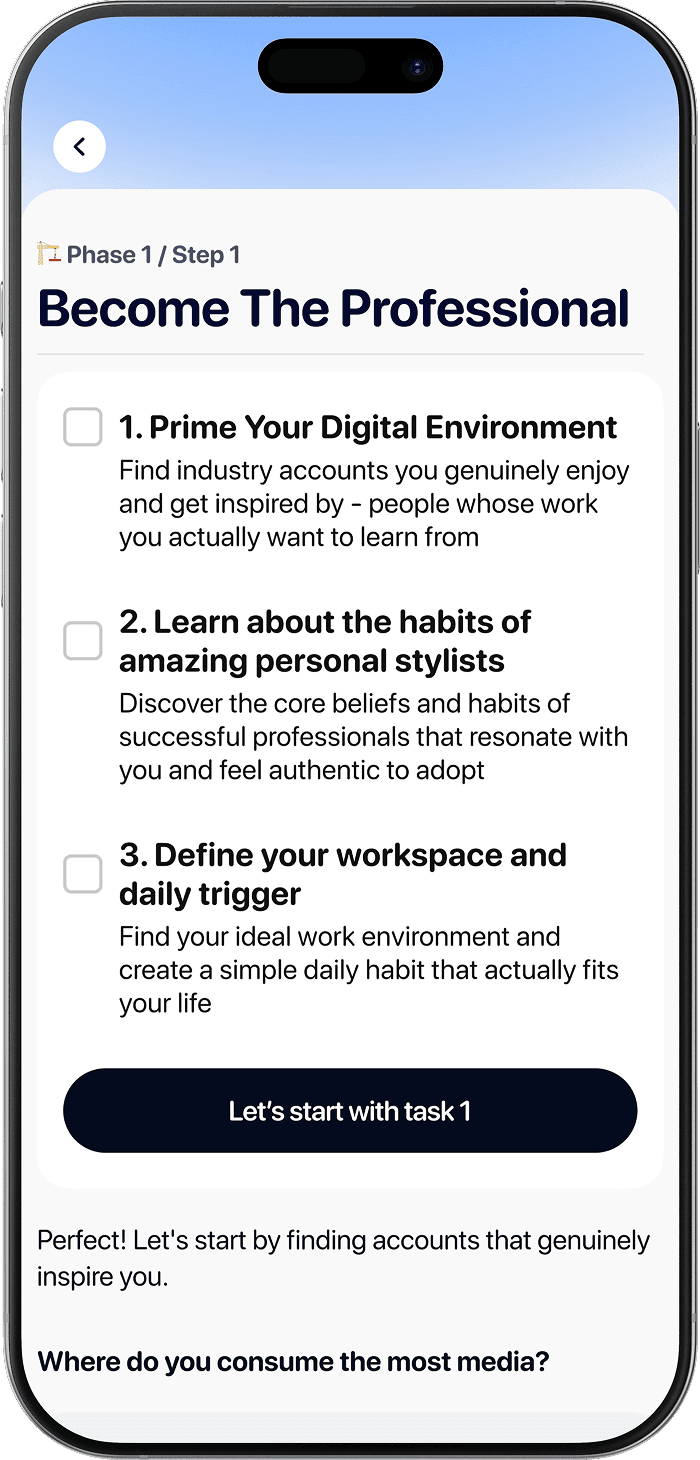
Playbook 00: Launch Pad — a guided side‑hustle coach, structured as both an app and a course. It followed three phases: 1. Foundation Building (Steps 0–6): identity, offering, systems, practice. 2. Confidence Building (Steps 7–10): test clients, feedback, real sessions. 3. Strategic Income (Steps 11–13): referrals, portfolio, charging clients. Core principles: keep it safe, keep it lean, deliver massive value first.
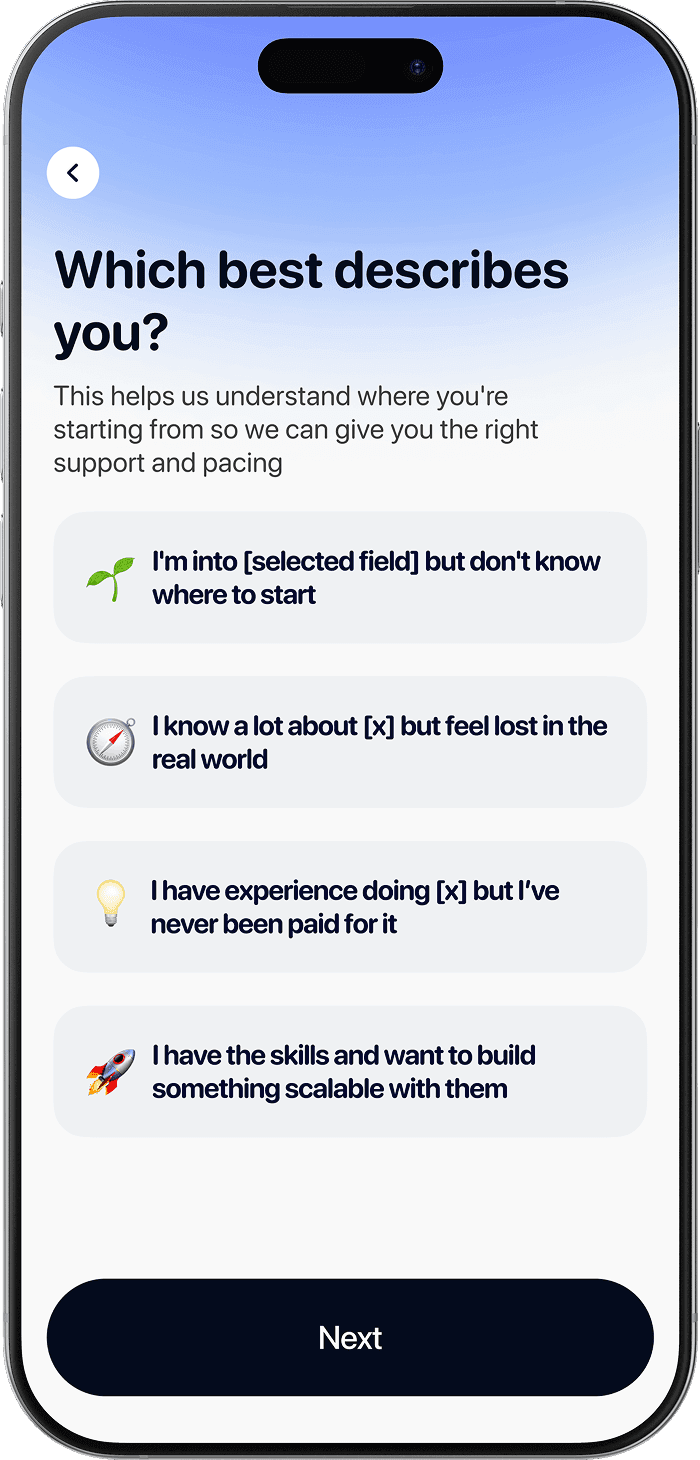
This gave Dreamers structure and focus for the first time. Instead of “everyone’s dreams,” it was now: “I’ll show you how to turn a skill into your first $100–500.” But even here, I stumbled. I still tried to serve two audiences at once people who already had a skill, and people who didn’t. It was tighter than before, but still too diluted to really stick.
Dreamers became stronger once I anchored it in my own lived experience. But the real focus problem still lingered: I needed to pick one person, one problem, one outcome. Otherwise, even the best system would feel too stretched.
Keep It Simple: Manifestation Pivot
After months of burning energy (and money), I finally faced a tough truth: the Playbook framework was solid, but only I could have marketed it. It was based on my freelance story. No matter how clean the system was, it was just me behind it — the only one who had lived it, and the only one who could sell it.
Meanwhile, I was stuck paying two UGC creators under contract. I couldn’t even stop the campaigns. Each week, I was bleeding $200 per creator, $400 total, while still making $0. That pain forced me to think differently: If I have to pay these creators, I need to give them something ultra‑simple to market. Something people can “get” in three seconds on TikTok.
At first, I tried to brainstorm quick wins — “what’s an app idea so simple it can offset my UGC burn?” The first idea was a Duolingo for self‑confidence. Super simple, clear message, viral‑ready. Even my creators agreed: “Yes, make it simple, people should get it right away.” For a minute, that was my pivot.
But then something clicked: manifestation.
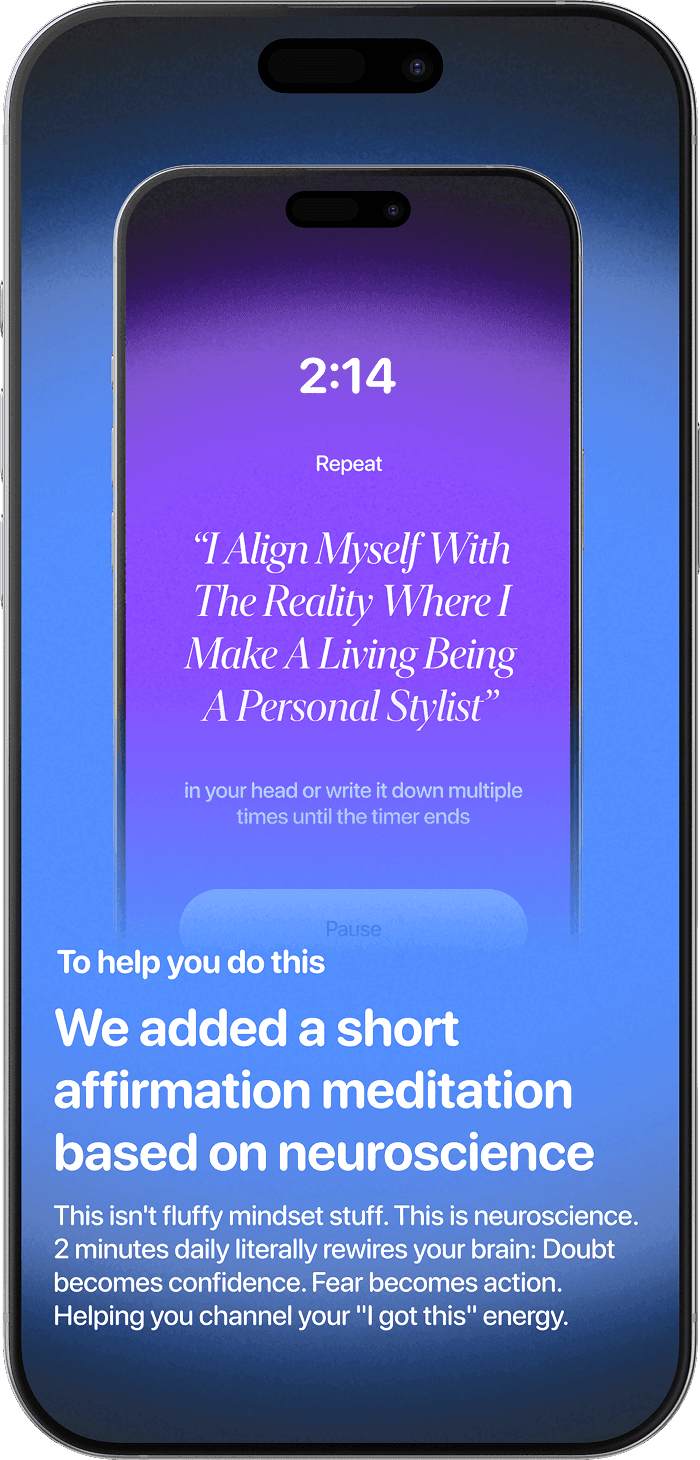
I noticed it was a massive niche on TikTok, with an audience already primed to engage. And unlike vague “dream chasing,” manifestation already had an emotional hook people loved. I dug into the neuroscience and realized: manifestation is basically guided mindset training, a daily practice that rewires how your brain pays attention to your goals. Suddenly, I had a new north star: make the viral manifestation app, but do it in a way that actually works.
This time, I wasn’t trying to solve everyone’s dreams. I wasn’t trying to overbuild. I wasn’t trying to fake virality. The goal was clearer: tap a big, existing audience and ship a concrete app they could understand instantly.
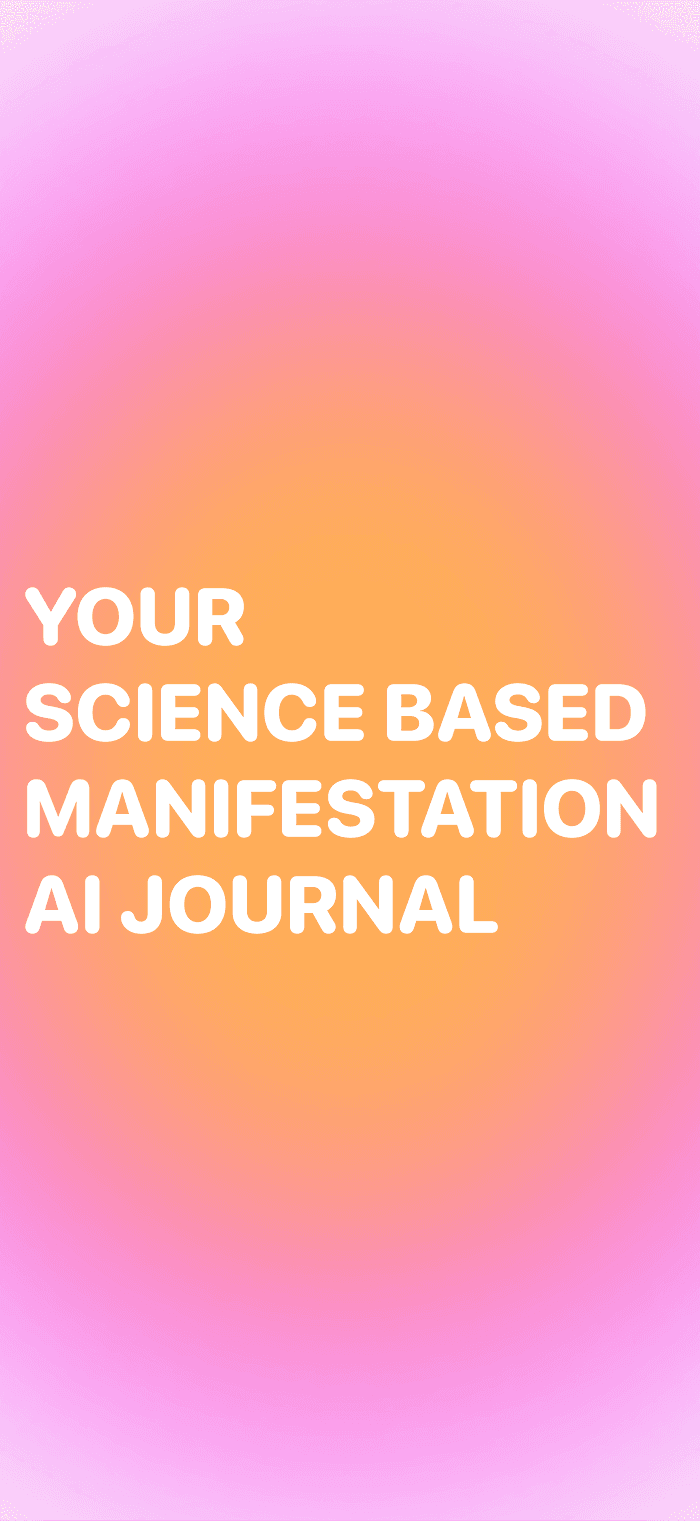
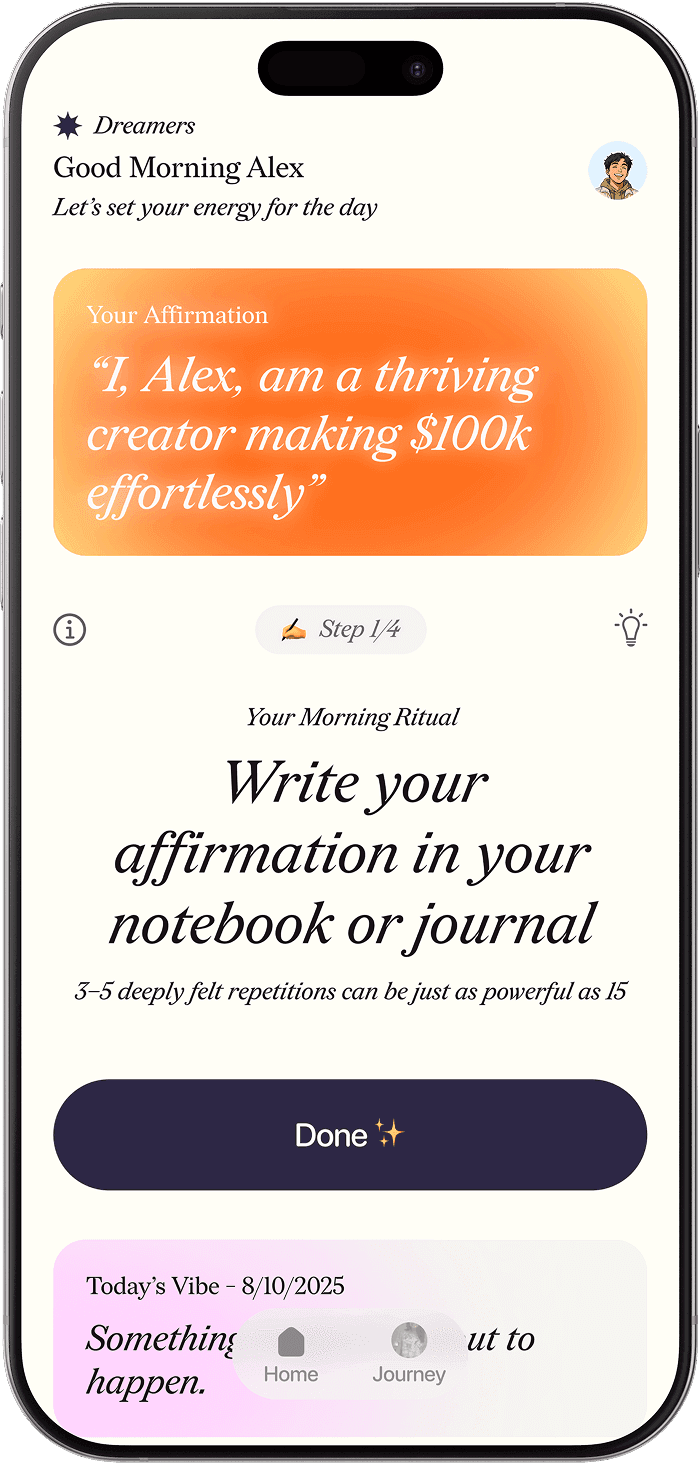
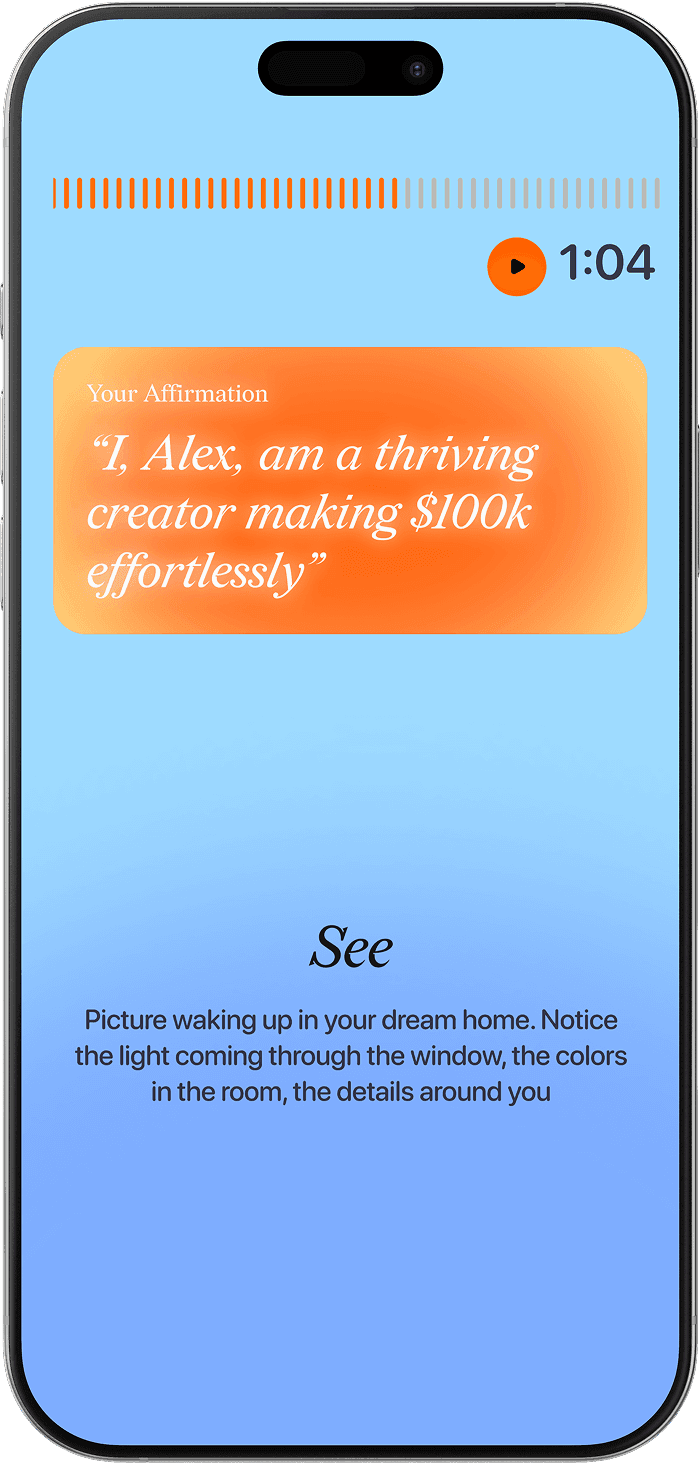
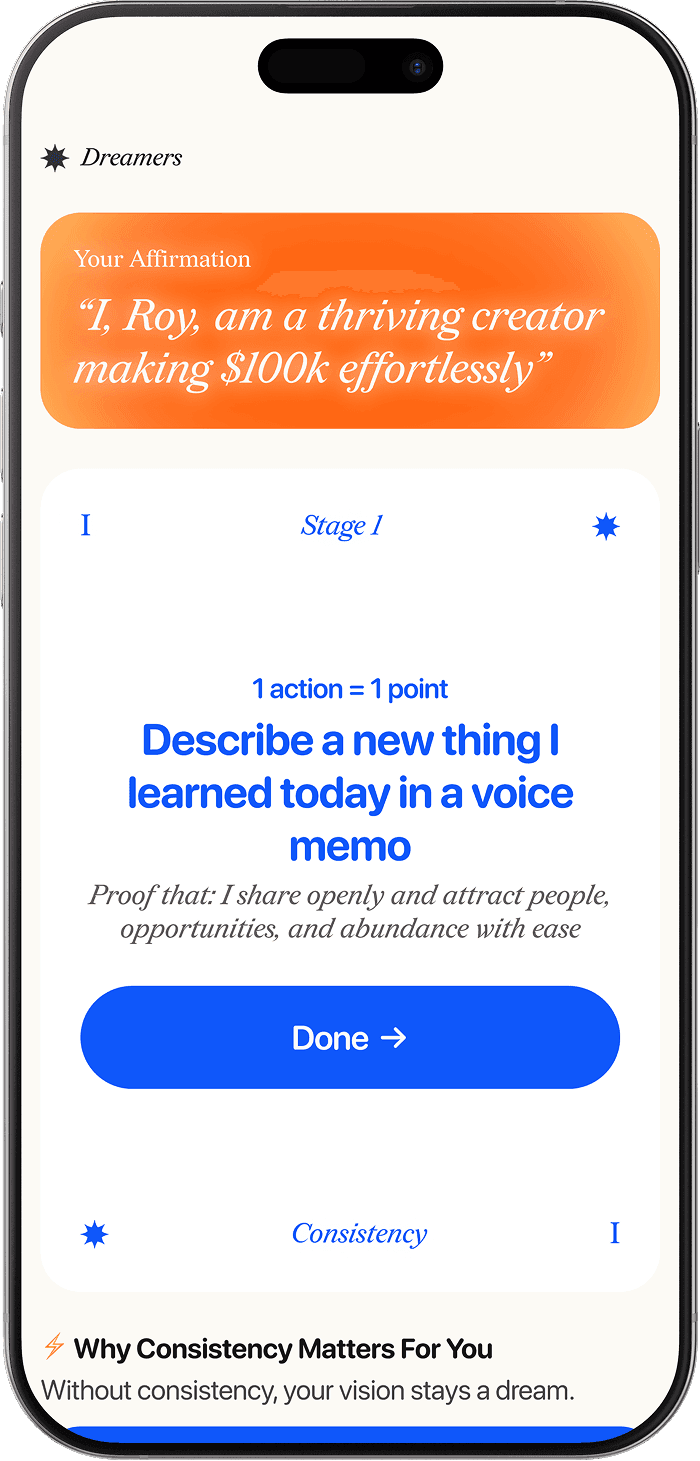
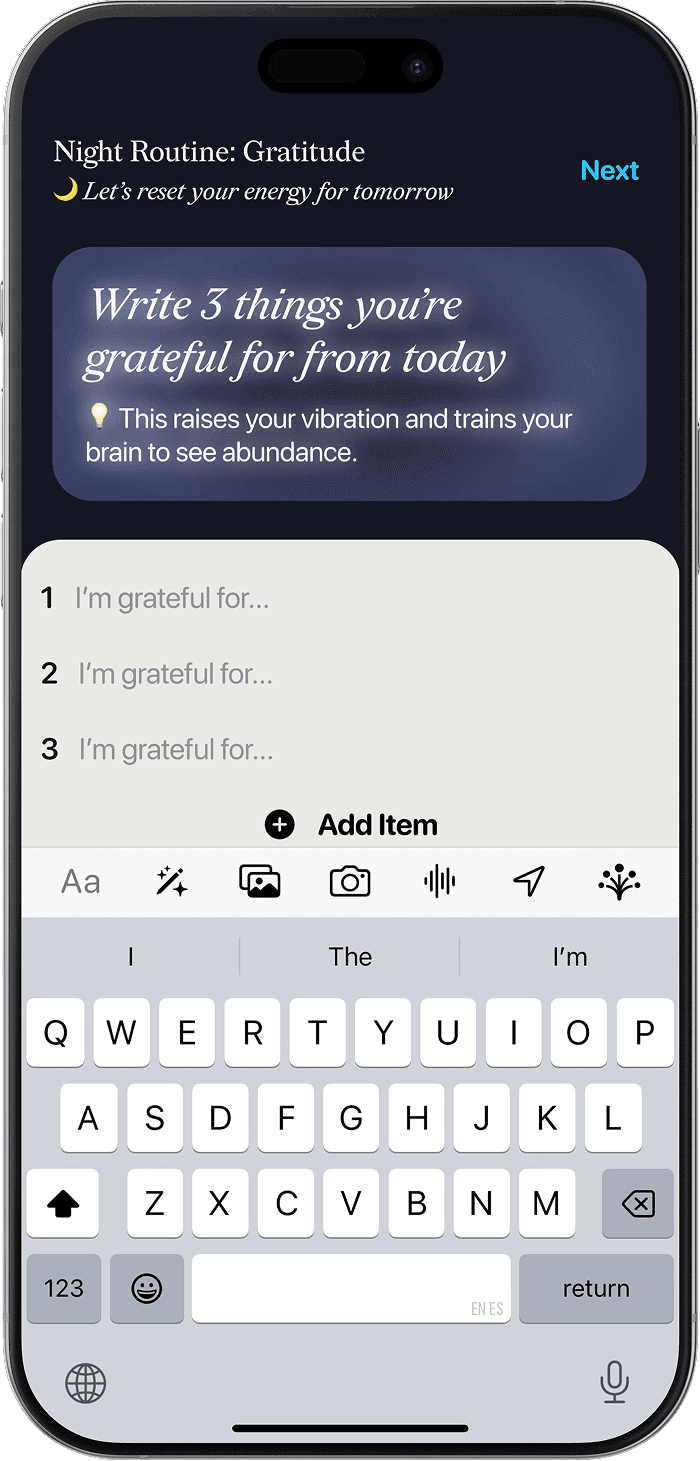
Dreamers morphed into its boldest pivot yet: a manifestation journal powered by neuroscience and AI. Daily rituals, morning and night flows, small tangible actions all wrapped in the vibe of “your future self is waiting.”
Pressure can lead to clarity if you let it. The UGC contracts felt like a trap, but they forced me to stop overcomplicating and actually build something viral‑first, value‑second. More importantly, this was where “help yourself first” really sank in: if I was going to build apps to help others change their lives, I needed to build the one that would keep me afloat first.
This version went live from idea to app store in 1 week.
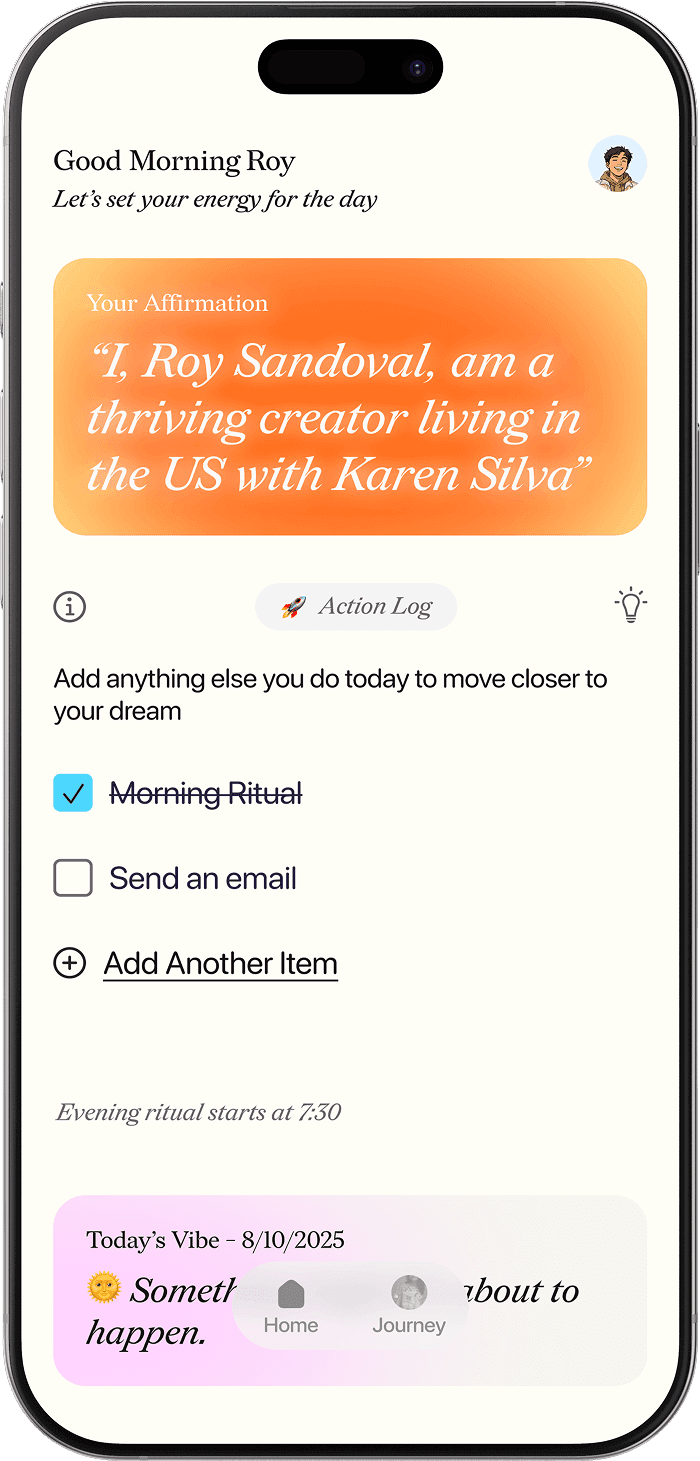
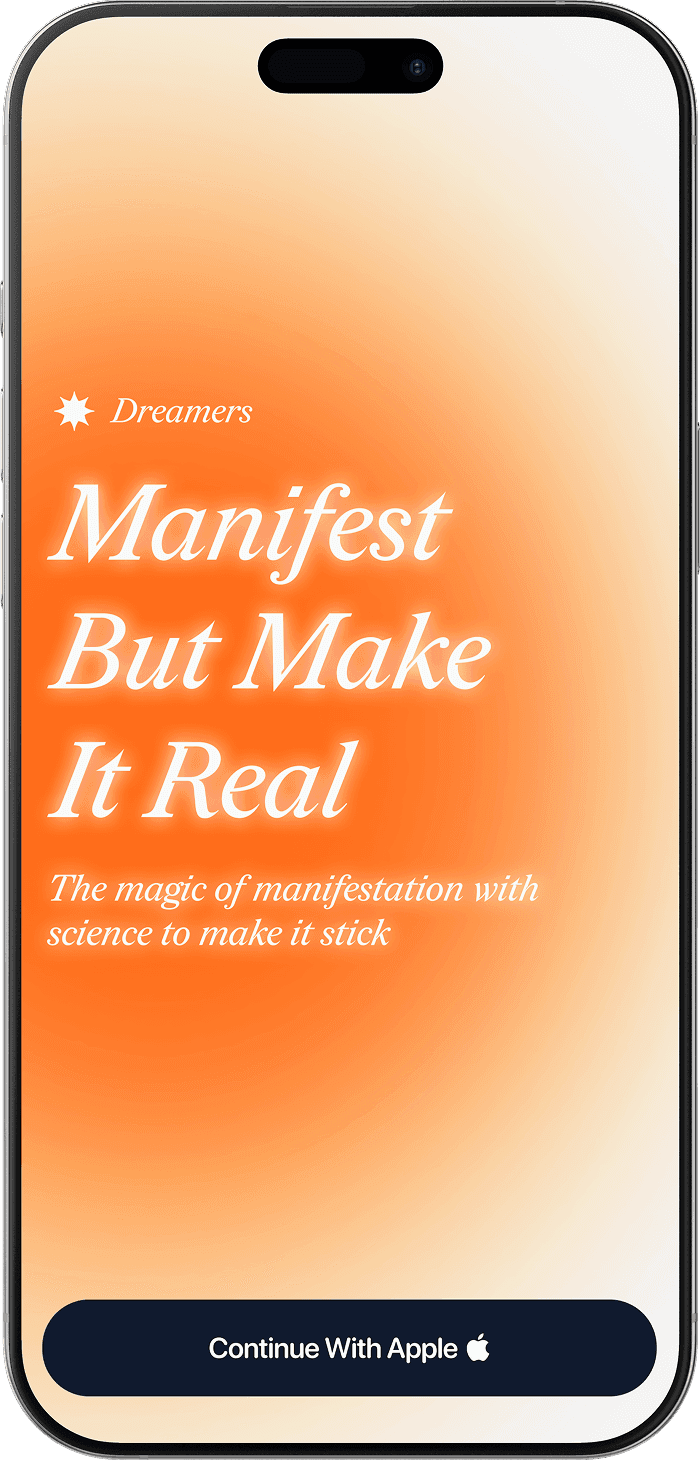
Your Future Self Is Waiting
The manifestation app came together quickly. For the first time, I paid close attention to how the market would react. I jumped straight into manifestation TikTok something I should have done earlier with Dreamers.
That’s when I learned something big: most people don’t see manifestation as work. They see it as the universe helping them. So trying to make manifestation feel like checklists and tasks didn’t connect.
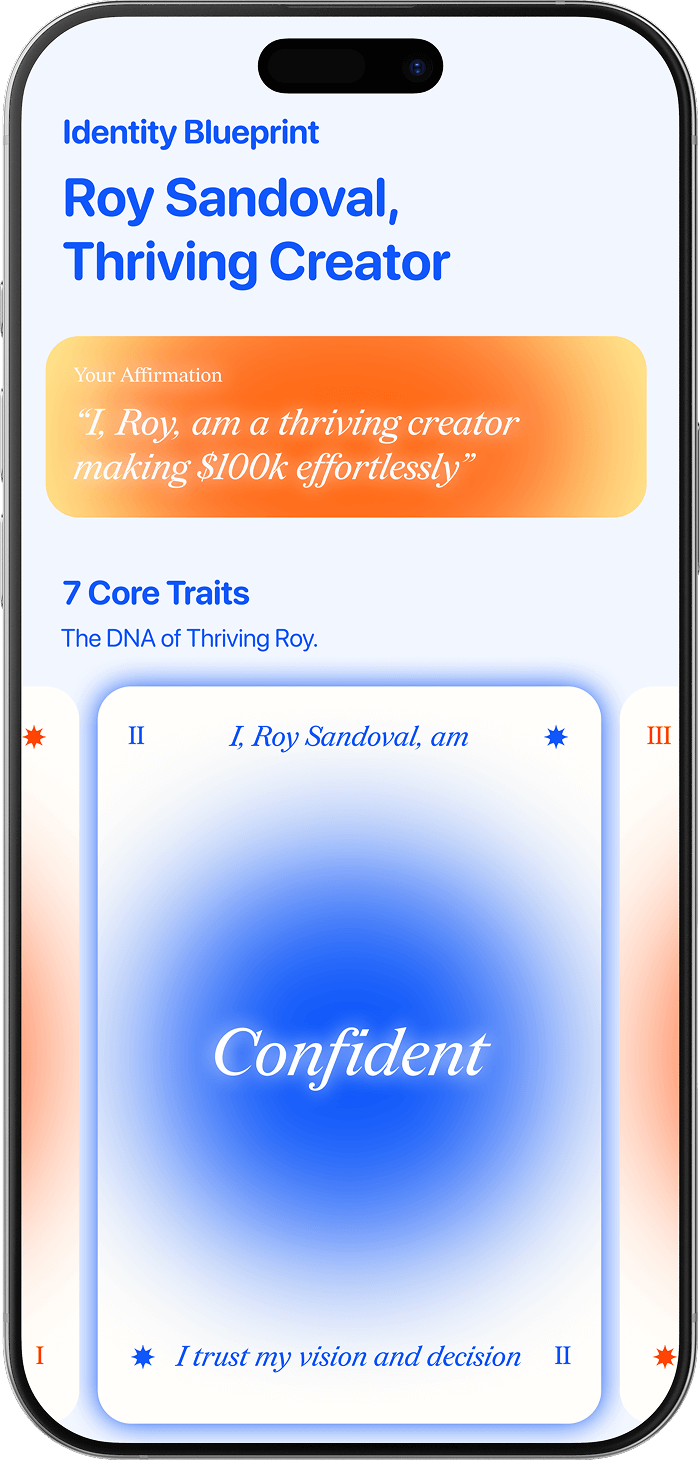
That insight unlocked a redesign. Instead of focusing on “daily grind,” the app became about identity shift:
• Embodying the kind of person who naturally attracts what they want. • Using neuroscience + gamification to guide the process. • Not just imagining your future self, but starting to live like them now
It felt perfectly aligned with the manifestation niche, and broad enough to expand into self‑help. I was energized again. I even had a tagline I believed in: “Your Future Self is Waiting.”
And then the reality hit. By the time the app was finished and approved on the App Store, I had run out of money. On top of that, I was still locked into contracts with my two UGC creators, paying $400 every week, until I finally couldn’t anymore. The product was live, but I couldn’t fuel it. That’s where I hit pause.
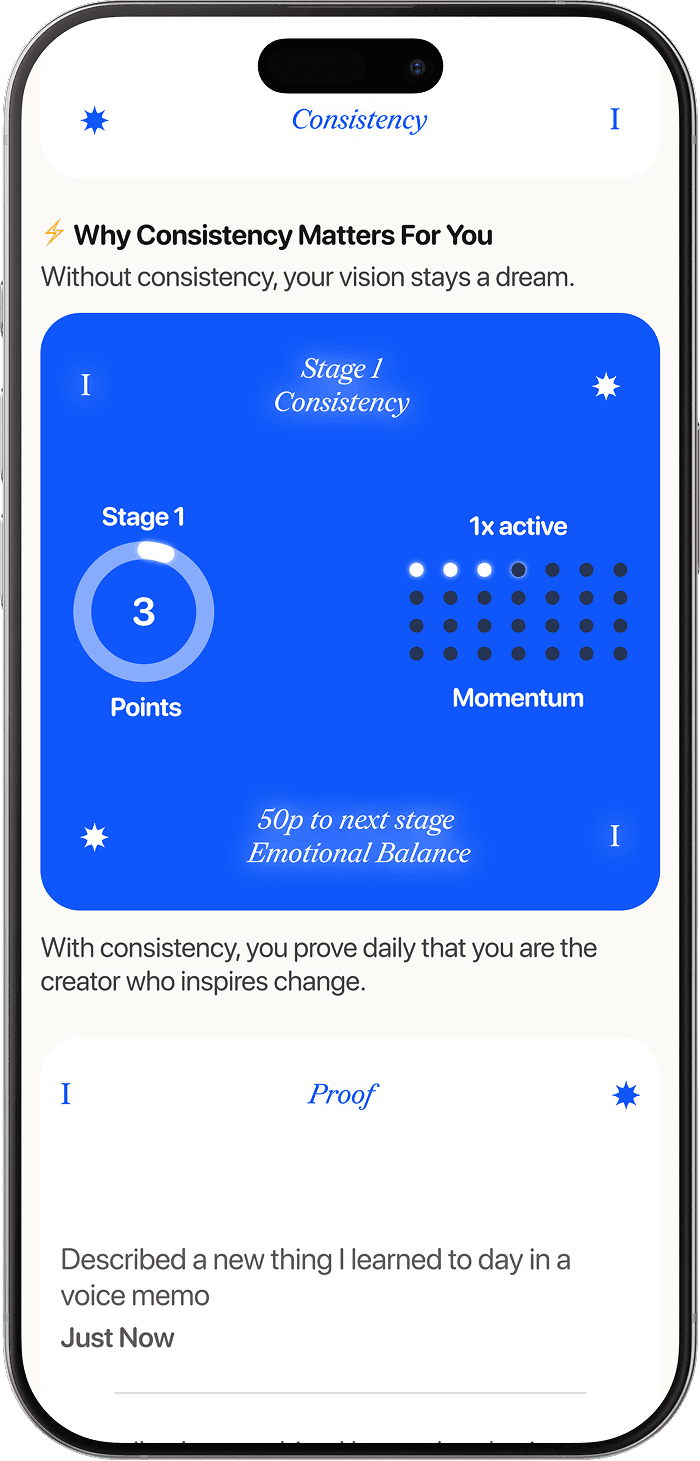
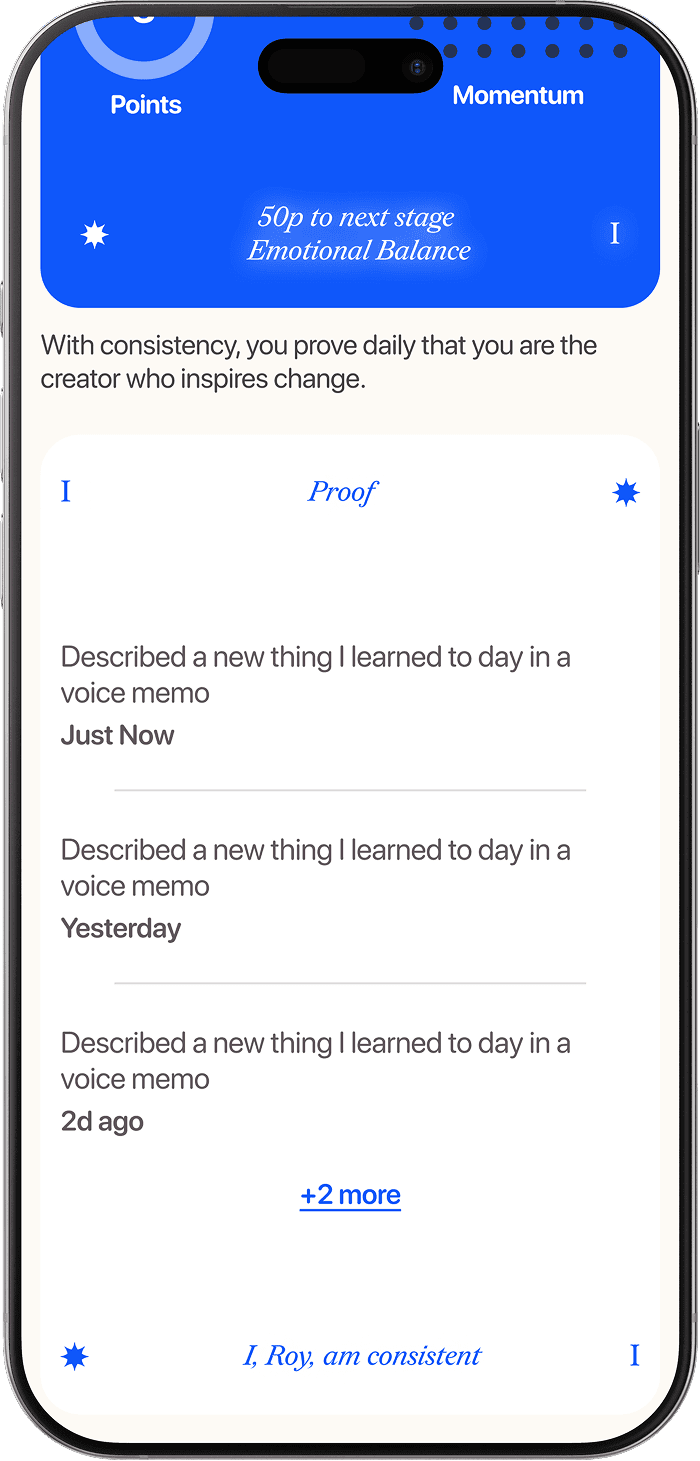
Closing Reflection
Looking back, my biggest mistake with Dreamers wasn’t just chasing too many ideas or targeting too broad of an audience it was doing a poor job of switching hats between designer, developer, and entrepreneur. I leaned too much into building and envisioning, and not enough into the essential work of entrepreneurship.
Here’s the lesson I want anyone starting something, whether a startup, business, or creative practice to take away:
Be an entrepreneur. As Pharrell Says: “Creativity without business is usually victimization, and business without creativity is a waste of time”
That doesn’t mean abandoning vision. It doesn’t mean sacrificing product quality. It simply means recognizing that money is oxygen. Without oxygen, you suffocate.
You don’t have to go broke building your business. Always keep an additional stream of income until your project matches it and you have savings to land on your feet if things don’t go as planned.
And here’s another truth I had to learn the hard way: hard work isn’t enough.
You can grind every single day, put in everything you have, and still come up short if you’re not solving an urgent problem with clear demand.
Hard work ≠ success. Problem/Value Fit = success.
The path to money isn’t tricks or hacks, it’s simple: • Money is just an exchange of value. • If you don’t feel ready to charge for what you’re building, do it manually first on yourself, with friends, with family. Practice until you can confidently deliver real results. • Once you’ve proven that value, productize it and charge. • From there: build community, brand, and systems to keep delivering.
Dreamers taught me the hard way that sustainable products don’t start with hype, overwork, or even vision alone, they start with proving value at the smallest scale, and scaling only once oxygen is secured.